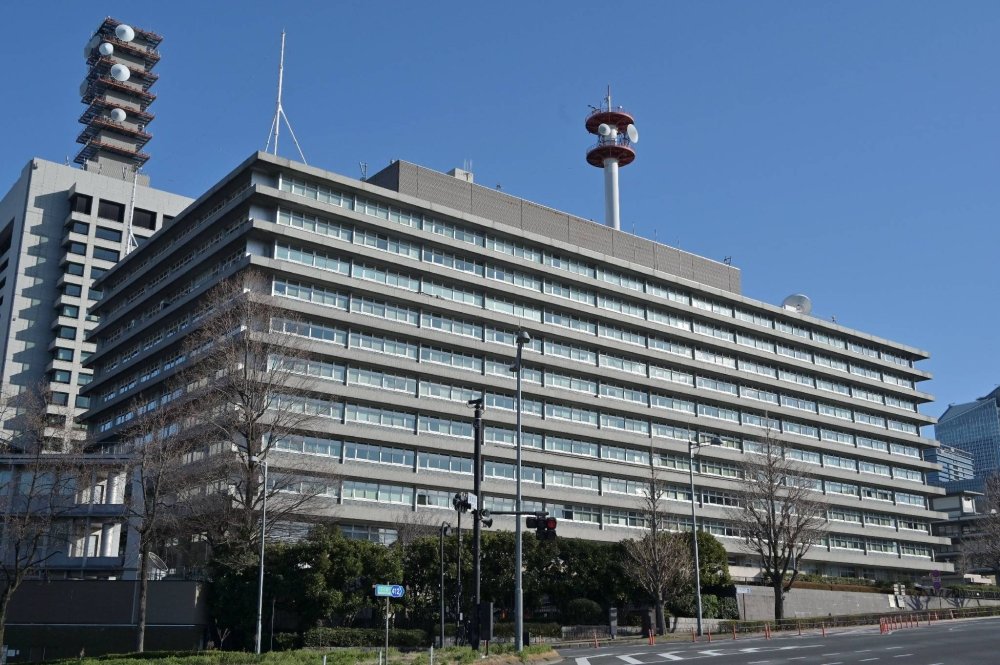
Transport ministry eyes autonomous lanes to ease freight crisis
The transport ministry is considering the implementation of automated freight lanes connecting cities such as Tokyo and Osaka to transport cargo, which would be expected to reduce congestion by up to 35,000 vehicles per day and help address a critical driver shortage in the freight industry.
Such lanes would allow the transportation of small parcels using unmanned carts. Preparations for a trial run in a limited area and for a set period of time will begin soon, with a goal to implement routes within the next 10 years.
Highway companies have proposed that automated freight lanes be set up either on the median strip or side of highways, or underground. The companies have also provided details on the technical feasibility of such lanes, said Yuri Endo, an official at the ministry’s road bureau.
The route between Tokyo and Osaka is the most natural choice for the project due to its high freight activity.
In April, a national regulation capping truck drivers’ overtime at 960 hours a year took effect, reducing the number of hours that individual drivers can stay on the road and straining logistics capacity — a situation known as the 2024 problem. The aging driver workforce is also a serious concern.
Without any government intervention, freight transportation capacity is projected to fall short by 34% by fiscal 2030.
“Given the current labor regulations in Japan — which have shortened the working hours for truck drivers — these lanes could serve as a complementary logistics method to support the trucking industry,” Endo said.
Implementing the automated freight lanes could reduce daily truck traffic by about 12,000 to 35,000 vehicles. In terms of drivers, the reduction equates to around 10,000 to 25,000 individuals, according to recent ministry estimates.
The automated freight carts will handle most regularly scheduled cargo while trucks will serve as backups to manage sudden changes in demand, allowing for flexibility.

If implemented, the autonomous freight lanes would reduce congestion by up to 35,000 vehicles per day. | JIJI
Endo said that since the project involves new infrastructure, a variety of costs will need to be evaluated along with how to integrate existing means of logistics — which have traditionally consisted of trucks, airplanes and ships — and where to establish new hubs.
The carts are envisioned to be powered by clean energy, and would address the labor shortage in logistics and also reduce greenhouse gas emissions by cutting motor traffic. Under certain conditions, the system is anticipated to reduce Japan’s annual carbon dioxide emissions from trucks by approximately 1.5% to 3.8%.
“Instead of gasoline-powered vehicles, we are considering using electric vehicles or other clean energy-powered options,” Endo said. “A positive aspect we anticipate is that this new logistics platform could contribute to carbon neutrality and other environmental goals.”
A similar plan is being pursued in Switzerland, which is looking to construct a network of underground tunnels to allow the transportation of cargo using autonomous pods that would allow them to operate at speeds of 30 kph continuously for 24 hours. The country plans to construct a total of 500 km of tunnels connecting major cities such as Zurich and Geneva by 2045.
Endo said the ministry is following the Swiss project closely to learn from it, adding that there are also ongoing discussions to learn from the United Kingdom where similar plans are in the works.












Post Comment