Salone del Mobile’s Maria Porro: ‘Italy and Japan share many things’
Centuries-old palazzos. Modernist villas. Intimate galleries. Wisteria-filled courtyards. Industrial warehouses. Chic showrooms. Railway arches. A 1930s lido. A vast fairground space spanning close to 210,000 square meters.
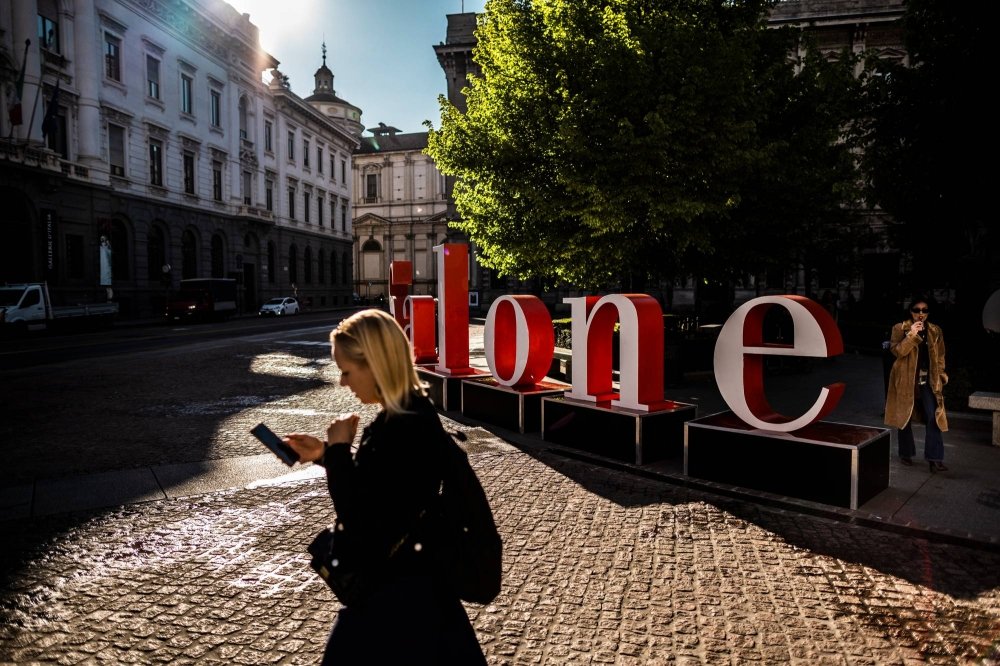
Design can be found in every corner of Milan this week. The city is amid its annual creative takeover, as Milan Design Week transforms countless spaces across its cobblestone streets into cutting-edge showcases of contemporary design.
And its longtime heartbeat is Salone del Mobile. Since launching in 1961, the iconic furniture fair has firmly established Milan’s status as a leading force in the global design world, with the event emerging as a major date on the industry’s calendar.
Inspired by ideas of innovation and evolution, this year’s event — the 62nd in its history — involves close to 2,000 exhibitors spanning its vast premises at Fiera Milano, with around 300,000 visitors expected to attend.
Center stage at Salone this year is an installation of two “Thinking Rooms” — identical and mirrored spaces designed to create immersive thresholds into a meditative world, as dreamt up by iconic filmmaker David Lynch. SaloneSatellite, a showcase of emerging design talent, also marks its 25th anniversary.
Throughout Milan, Japan’s design imprint is increasingly visible. Creative explorations from a roll call of top names are present this year: Karimoku, Maruni, Issey Miyake, Time & Style, Hosoo, Keiji Ashizawa, Teruhiro Yanagihara Studio, Junya Ishigami and more.

Maria Porro is the fourth-generation head of her family’s furniture company and the youngest-ever president of the Salone del Mobile design fair. | COURTESY OF GUIDO STAZZONI
The powerhouse behind this whirlwind week of design is Maria Porro. Salone’s first female and youngest-ever president since being named to the position in 2021, Porro, 40, is breathing fresh creative air into the event with her open perspective and dynamic innovations aimed at creating a human-centric and community-focused experience.
For Porro, the event is etched into her DNA. The fourth generation of Porro, a respected Milanese furniture company, her own creative path was deeply inspired by visiting Salone as a child. Here, she tells The Japan Times about her inspirations, values and dreams for Salone moving into the future.
How would you describe the experience of stepping inside Salone this year?
Immersive. Salone is about immersing yourself in ideas about how we will live in the future. It’s not just about new products — every company puts on stage ideas about what is coming next. Through new materials, new proportions, new concepts, when you enter Salone, you see every company building its own architecture. Everything is curated — the sound, music, perfumes, lights — to create a particular atmosphere. This is Salone — and why it’s different from every other event in the world.
What kind of themes are in the spotlight?
One important question being asked is how a bathroom can reduce water consumption. Sustainability is key, particularly in terms of water consumption in hotels and large public buildings. We have a big, immersive installation about water consumption, going beneath the surface of the sea, with infographics and numbers telling us about the sustainability of our bathrooms.

For one week each year, the streets of Milan are bedecked with works from some of the world’s best designers. | COURTESY OF SALONE DEL MOBILE
How connected is this year’s Salone to its setting here in Milan?
Milan plays a key role. It’s important to understand (Salone’s) genesis. The event began as an avant-garde happening in the early 1960s, with exhibitions in an old abandoned factory. There is a reason why such a big community now travels to Milan every year for Salone — this city is still creating new stages for the avant-garde and new research perspectives. The city is a stage for big brands, of course, but there is still a flavor of the original avant-garde.
What was it like growing up in Milan alongside this event?
My family company, Porro, will be 100 next year. It’s one of only 15 companies that have taken part in Salone since the start. As a child, I always went to Salone to see my grandfather and my father. I had to wear a nice dress and have my hair brushed because the international clients were already there in the ’80s. In the fairground where it was held, there was maybe the highest escalator in northern Italy. When I was about 8, I have clear memories of going up it and looking down and seeing all the presentations below. It was like seeing a plan, a map. I saw all the colors and styles of brands — all different. I’m sure this later led me to studying design.
How has Salone evolved under your leadership?
Every year, we redesign the master plan, just like a city. We start with empty spaces and redesign the “streets.” It’s an amazing opportunity. We’ve introduced the idea of a public space, a square designed by (Milan- and Rotterdam-based studio) Formafantasma, where we hold public talks. When you visit Salone, you need time to stop and recharge. It’s a simple idea — one key speaker, at the same time, every morning. Last year, it included Japanese architect Shigeru Ban.

Maria Porro says Italy and Japan share some design sensibilities, but the ways they differ are equally interesting. | COURTESY OF SALONE DEL MOBILE
Japan has long had a strong presence at Salone. Why do you think that is?
Italy and Japan share many things; for example, a strong relationship with craftsmanship and manufacturing. Many Italian companies, like in Japan, still own the production of their products. This is very important. So when an international designer comes to an Italian manufacturer, they speak to the owner about the product, then go to the research and development department inside the factory, which has direct contact with the production unit. This means the product is designed and made in Italy. This interconnection between all the processes is very similar to Japan.
And in terms of aesthetic values?
For sure, there are strong connective points — but also differences. Japanese design has totally different proportions compared to European perspectives. Also, for wood joinery, in Italy, we use a technique called coda di rondine (swallowtail). Then you look at the Japanese way of joining wood — to solve the same technical need, we have different approaches. In these details, we can see connections but also differences. This is very inspiring. Both cultures also have strong ceramic and porcelain traditions. But Italian proportions and how we paint are not the same. The values are shared — but the way we interpret them is different.
How do you feel about being the first — and youngest — woman Salone president?
Women have always been a part of the design industry but have always had to fight. Think of Charlotte Perriand, Lina Bo Bardi, Gae Aulenti — and Marva Griffin, the founder of SaloneSatellite. In the ’60s and ’70s, women were still excluded from inheriting family companies, which always went to the son. Now things are different — there are more and more young women entrepreneurs. And I always thank my parents for never putting me under any pressure to work with the family company.

Maria Porro says she can remember attending Salone del Mobile events since the time she was in primary school. | COURTESY OF GIANLUCA VASSALO
Did you have to fight?
I did not fight to become president — but I still maybe need to prove myself every day. I was nominated in the middle of the COVID-19 pandemic storm. It took me 15 days to say yes because it was such a hard and tough moment. I had other roles, and a 1-year-old at home, my third child. But I said yes, because I know that if Porro is Porro now, it is thanks to Salone.
What’s your long-term hope in terms of Salone’s imprint on the world?
Salone has already had a strong impact — on companies, design sectors, the city. Now, we have to preserve this strength. It’s not about wanting to earn more every year — this is not Salone. This event is owned by the exhibitors, and it’s community focused. I hope that as a team, we can keep this philosophy of focusing on the common interest moving forward.











Post Comment