
Trump’s Economic Plan: Tariffs, Tax Cuts, and Trade
- Trump’s economic plan includes tariffs on imports, particularly from China, to increase U.S. revenue.
- Economists warn these tariffs could raise consumer prices, disrupt global trade, and increase U.S. inflation.
- Trump’s plan also includes extending tax cuts and lowering corporate income tax, but these could be counteracted by the proposed tariffs.
- The plan’s potential impact on the U.S. economy and global trade is complex, with possible short-term benefits but potentially detrimental long-term effects.
As the November elections approach, the economic strategy of Republican presidential candidate Donald Trump is under intense scrutiny. Trump’s plan is centered on the implementation of tariffs to bolster U.S. coffers and exert pressure on other countries, particularly China. However, economists warn that the reality of this approach is far from straightforward and could have far-reaching implications for the U.S. economy and global trade.
Trump’s tariff proposal is ambitious, with a 10 to 20 percent across-the-board tariff on imports and a 60 percent rate on Chinese goods. He has also threatened a 200 percent levy on automobiles made in Mexico. The rationale behind these tariffs is to add billions in revenue and target countries like China, which Trump accuses of ripping us off. The ultimate goal is to incentivize businesses to bring production back to U.S. shores.
However, economists warn that these tariffs could raise consumer prices and disrupt global trade, with unclear benefits to U.S. production. The Peterson Institute for International Economics (PIIE) estimates that U.S. inflation could rise 1.3 percentage points above baseline next year if Trump imposed a 10 percent universal tariff and other governments retaliate. Sharp hikes on Chinese goods would also fuel inflation.
Impact on U.S. Trade Relations
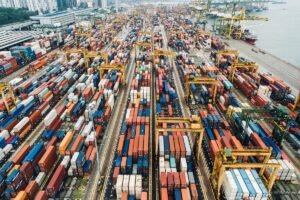
The tariffs could also have a significant impact on U.S. trade volumes. Oxford Economics predicts that Trump’s tariff plans could slash bilateral U.S.-China trade by 70 percent, redirecting or eliminating hundreds of billions of dollars’ worth of exchanges. U.S. trade volumes could be cut by 10 percent, becoming more centered on North American and other free trade agreement partners.
While the tariffs would raise some $500 billion in revenue annually, rerouted trade from China could slash this figure closer to $200 billion per year eventually, according to Bernard Yaros of Oxford Economics. This suggests that the tariffs, while potentially beneficial in the short term, could have long-term negative impacts on the U.S. economy.
Alongside his tariff plans, Trump wants to extend expiring tax cuts and lower corporate income tax further. However, the Tax Foundation warns that these proposed tariffs could counteract the benefits from his tax policy while falling short of offsetting the tax revenue losses.
Energy and Agricultural Policies
Trump’s economic plan also includes measures to lower energy costs, potentially through more deregulation in the domestic oil and gas sector. However, Yaros expressed skepticism that this would unleash significantly greater production given that it depends on major energy producers, who in turn have shareholders to answer to.
Trump’s plan to limit foreign agricultural imports to lower food costs could also trigger retaliation, harming U.S. farmers who export significantly. This is a critical point, as rural voters, who rely heavily on agricultural gross domestic product (GDP), would suffer the most, losing their labor force and making production more expensive, if not unprofitable.
The potential impact of Trump’s economic plan on the U.S. economy and global trade is a complex issue. While the proposed tariffs and tax cuts could provide short-term benefits, the long-term effects could be detrimental, leading to increased consumer prices, disrupted global trade, and potential retaliation from other countries. As the November elections approach, these issues will continue to be a focal point of debate and analysis. The economic future of the U.S. hangs in the balance as voters prepare to make their choice.











Post Comment