Researchers find tiny marine ecosystem — population 307 — in a bottle cap
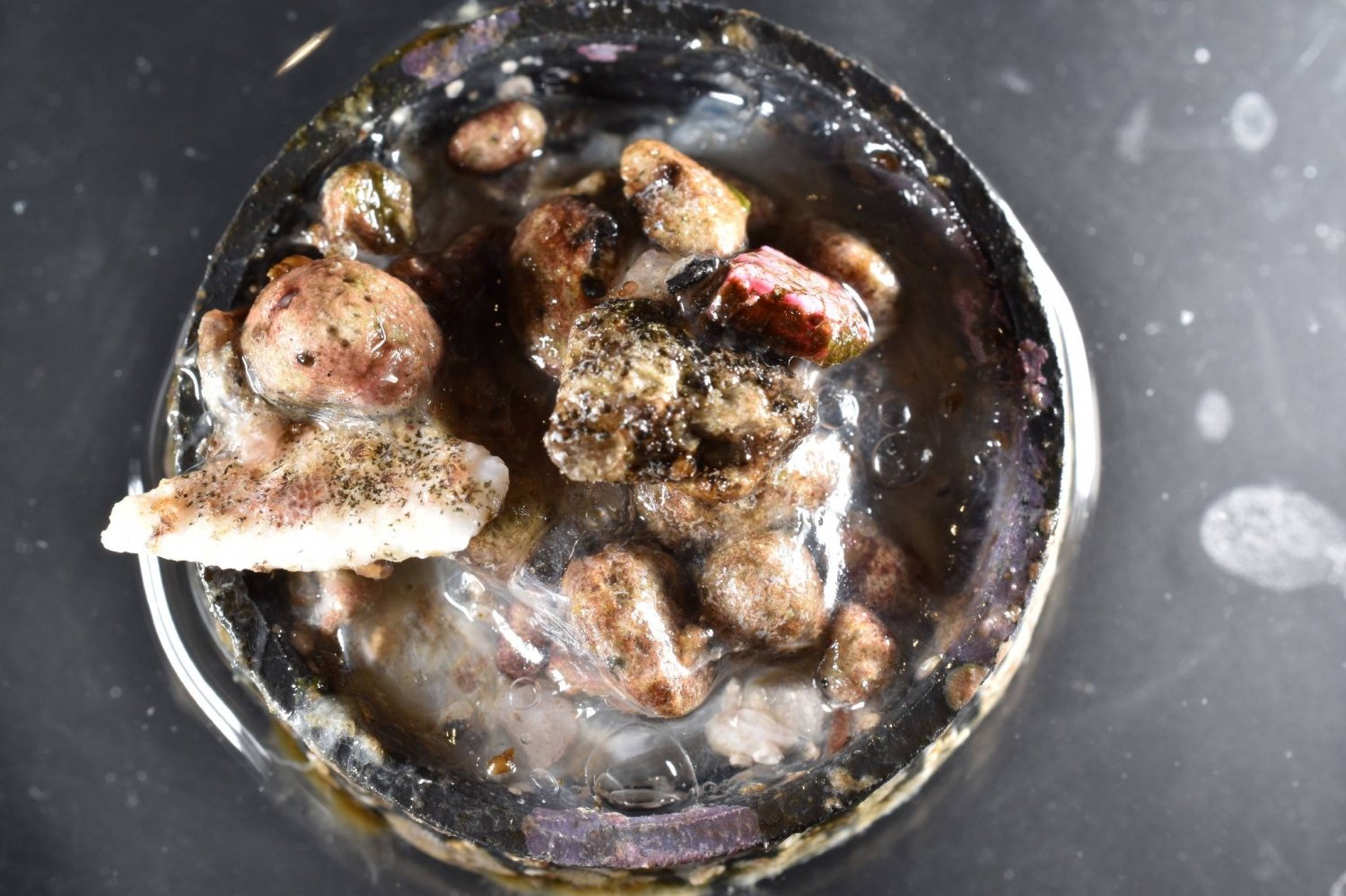
A tiny ecosystem with a variety of organisms has been found in the cap of a plastic bottle recovered by a research ship of a Japanese government institution off Kochi Prefecture.
Inside the floating cap collected by the Kaimei ship of the Japan Agency for Marine-Earth Science and Technology (JAMSTEC) was a nest created by lugworms using mucus and pebbles, according to a recent announcement by a Japanese research team including JAMSTEC, Nagoya University, Kyoto University and Fukui Prefectural University.
The discovery of the bottle cap shows that a large amount of plastic waste floating in the sea can become small ships of organisms, and this research method will help estimate the invasion route of alien species and find ways to control them, according to the team.
An article on the team’s research was published in international journal Marine Pollution Bulletin.
The cap, with a diameter of about 3.5 centimeters, bore the name of a Philippine beverage maker.
A total of 307 specimens of various organisms, including barnacles, bryozoans and foraminifera, were found in the cap, and it is believed that they congregated to the cap after the lugworms built the nest on the coast of the Philippines and that the cap then drifted to waters off Kochi, the team said.
Isotopic ratios of oxygen and carbon in the shells of the foraminifera revealed changes in water temperatures during the travel. Also as a result of a computer simulation, the team estimated that the cap was washed away by the Kuroshio Current, which flows north off Japan in the Pacific, and spent more than 70 days reaching around Kochi.












Post Comment