Laundry businesses in quake-hit Kumamoto wash evacuees’ clothes for free
HIKAWA, KUMAMOTO PREF. – Local dry cleaning and laundry businesses in Kumamoto Prefecture are washing clothes without charge for disaster evacuees following last month’s magnitude 7.1 earthquake.
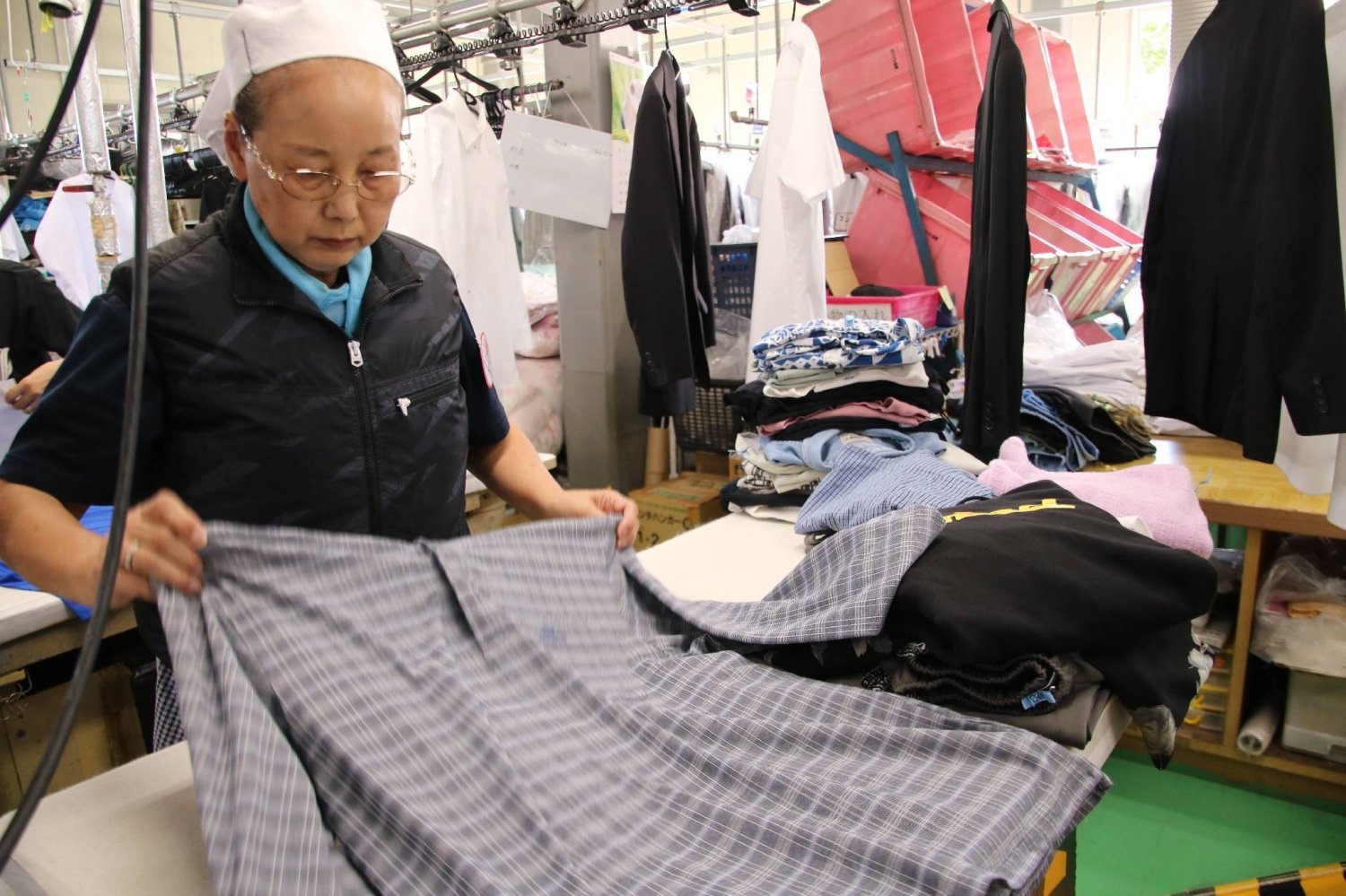
A laundry facility affiliated with the White Express dry cleaning and laundry chain in the Miyahara district of the town of Hikawa has sent a vehicle every morning on business days since Aug. 7 — 10 days after the July 28 quake — to collect bags of clothing from evacuation centers. It washes and dries more than 1,000 items, including towels and underwear, each day and returns them to evacuees.
“We owe our business to the local residents,” said Hiroaki Sekihara, the 36-year-old head of the facility. “We want to give back to the community even a little bit, especially at a time like this.”
Kiyomi Matsumura, a 53-year-old employee, visited an evacuation center to return washed clothes and was greeted by a staff member there. “Someone once thanked me for all that I do, which made me feel glad that I was doing this,” Matsumura said.
Folding freshly dried T-shirts and trousers, 64-year-old employee Mihoko Tsukamoto said, “We want to help disaster-affected people whose homes have been destroyed and who cannot even take a warm bath.”
Amid consecutive days of scorching heat, many locals wash their clothes by hand at evacuation centers or return to their damaged homes to do laundry.
“I want to help the disaster victims live more comfortably,” Sekihara said.
Behind the initiative is the Disaster Sentaku Assistance Team (DSAT), a volunteer network of professional cleaners launched after a powerful quake in the Noto Peninsula in Ishikawa Prefecture, in January 2024. Sentaku means washing in Japanese.
In collaboration with a laundry and dry cleaning industry association in Kumamoto, the team called on local businesses in the cities of Yatsushiro and Uki to join the initiative. Laundry costs under the initiative are covered by support funds given to the DSAT and other sources.
“It’s important to maintain a hygienic environment for people in evacuation centers in extreme heat,” said Yuichi Nakamura, the 42-year-old head of the DSAT.
Expecting a potential increase in demand for laundry services for clothes retrieved from collapsed houses, Nakamura said, “We want to keep supporting people as long as there are requests.”










Post Comment