Japan-India Defense Ties Strengthen Amid Regional Uncertainty
- Japan and India are deepening defense ties amid regional uncertainty.
- The nations plan to establish a senior officer-level dialogue body to coordinate their forces.
- This move is a response to China’s expanding military presence in the Indo-Pacific region.
- The agreement highlights strategic moves by nations to counter common threats.
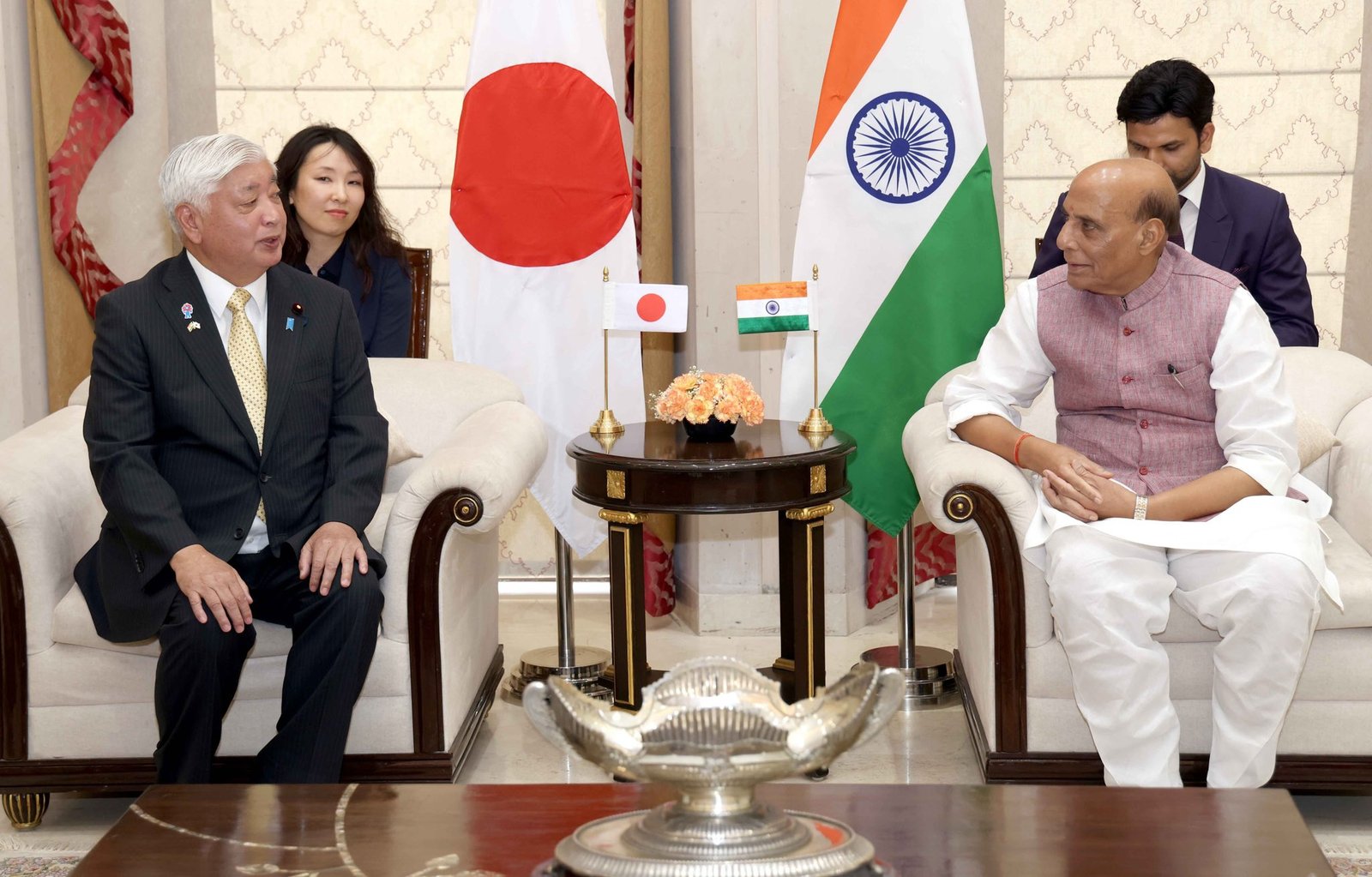
In a significant development that underscores the shifting geopolitical dynamics of the Indo-Pacific region, Japan and India have agreed to deepen their defense ties. The defense ministers of the two nations have decided to initiate discussions aimed at establishing a senior officer-level dialogue body. This move comes in the backdrop of China’s continued expansion of its military presence in the region, a factor that has been a cause of concern for both Tokyo and New Delhi.
The Japanese Defense Minister, Gen Nakatani, and his Indian counterpart, Rajnath Singh, have affirmed that the Japanese Self-Defense Forces and the Indian military will increase their joint exercises. Nakatani shared this information with reporters following their talks in New Delhi. The proposed dialogue body will be responsible for coordinating the overall collaborative work between their forces, as per Japanese government officials.
At the beginning of the meeting, Nakatani emphasized that stronger ties between Japan and India have become more important in the current geopolitical context. He pointed out that the situation surrounding them is becoming increasingly complicated and uncertain, especially at a time when U.S. President Donald Trump’s commitment to the Indo-Pacific region remains unclear.
Strengthening Bilateral Defense Collaboration
Rajnath Singh expressed his hope to Nakatani that the bilateral defense equipment and technology collaboration with Japan would continue. Japan has been progressively strengthening its security ties with India in recent years. This has been evident in the increasing joint drills and the reinforcement of defense capabilities in the space and cyber domains.
The two nations have also been discussing a plan to transfer Unicorn communication antennas, similar to those installed on a new Japanese Maritime Self-Defense Force destroyer. This meeting between the defense ministers followed Tokyo’s approach to New Delhi about participating in the Global Combat Air Program. This initiative, involving Japan, Britain, and Italy, aims to jointly develop a next-generation fighter jet by 2035, according to government sources.
Quad Grouping and the Counterweight to China
Japan and India are part of the Quad grouping of Indo-Pacific democracies, which also includes the United States and Australia. This framework is widely perceived as a counterweight to China. Nakatani’s visit to India is part of a four-day trip that has also taken him to Sri Lanka.
This development is reminiscent of historical events where nations have come together to counter common threats. For instance, the formation of NATO in 1949 was a strategic move by North American and European countries to counter the Soviet Union’s military threat during the Cold War. Similarly, the current deepening of defense ties between Japan and India can be seen as a strategic move to counter China’s growing military presence in the Indo-Pacific region.
The agreement between Japan and India to deepen their defense ties is a significant development in the Indo-Pacific region’s geopolitical landscape. It not only underscores the shifting dynamics in the region but also highlights the strategic moves by nations to counter common threats. The proposed senior officer-level dialogue body and increased joint military exercises are steps in this direction. As the situation continues to evolve, the world will be closely watching the developments in this region.









Post Comment