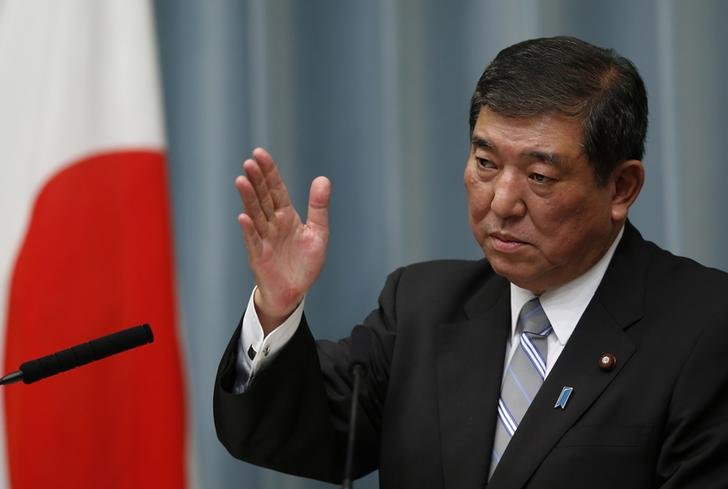
Ishiba’s Leadership Test: Japan’s High-Stakes Election
- Japan’s upcoming general election is a crucial test for new Prime Minister, Shigeru Ishiba, amid economic uncertainty.
- Ishiba’s Liberal Democratic Party (LDP) may lose seats to the opposition, adding unpredictability to the election.
- The election results will have significant implications, especially if Ishiba fails to secure a majority for the ruling coalition.
- The outcome will shape Japan’s response to pressing issues such as economic recovery, inflation, and digital transformation.
As Japan prepares for its general election on October 27, the stakes are high for the newly appointed Prime Minister, Shigeru Ishiba. The election is seen as a litmus test for Ishiba, who is striving to consolidate his position at the helm of a party beleaguered by scandals. The decision to call for a snap election, following his narrow victory in the leadership contest for the ruling Liberal Democratic Party (LDP) last month, could potentially backfire. Opinion polls indicate that the LDP may lose seats to the opposition, adding an element of unpredictability to the election.
Ishiba inherited a party in disarray, grappling with a scandal over undocumented funds. His predecessor, Fumio Kishida, had attempted to restore public trust by removing tainted ministers, dissolving influential factions, and stepping down. However, Ishiba’s battle appears to be uphill. While some polls suggest that the LDP and its coalition partner Komeito will retain their majority, a weekend poll by the Asahi newspaper indicates potential struggles, with the LDP possibly losing 50 of its current 247 seats.
The implications of the election results are significant. If Ishiba fails to secure a majority for the ruling coalition, questions about his leadership capabilities may arise, particularly during a period of economic uncertainty and escalating tensions with neighboring countries such as China, Russia, and North Korea.
The Opposition and the Political Landscape
The LDP has dominated Japanese politics for most of the post-war era, holding a majority in the 465-seat lower house. Its long-standing coalition partner, Komeito, is backed by a large Buddhist lay group that has often provided crucial campaign support to the LDP. Despite the LDP’s popularity dipping to a low of 25.5% in June – the lowest since it regained power in 2012 – it remains the most popular party in a fragmented political landscape, with support from 35.1% of respondents in a mid-October poll by public broadcaster NHK.
However, the main opposition, the Constitutional Democratic Party of Japan (CDPJ), is gaining ground. The Asahi poll estimated that the CDPJ could secure as many as 140 seats in the election, a significant increase from its current 98.
The economy and inflation are key issues for voters, as indicated by the NHK poll. The scandal over the slush fund also remains a concern. A quarterly survey by the Bank of Japan in early October revealed that rising living costs have led to increased spending on food and daily necessities compared to a year ago.
Economic Challenges and Policy Responses
In response to these economic challenges, Ishiba has instructed ministers to devise a new economic package to mitigate the impact of rising living costs on households. The opposition CDPJ, on the other hand, has announced plans to increase welfare spending, including free university education.
The election comes at a time when Japan, like the rest of the world, is grappling with the economic fallout of the COVID-19 pandemic. The pandemic has accelerated the shift towards digitalization, presenting both opportunities and challenges. While technology has enabled remote work, online education, and telehealth, it has also exacerbated economic inequality and raised concerns about data security and privacy. The election results will undoubtedly have implications for Japan’s approach to these issues in the post-pandemic era.
In conclusion, the upcoming general election in Japan is a critical juncture for the country’s political and economic future. The outcome will not only determine the leadership of the ruling LDP but also shape Japan’s response to pressing issues such as economic recovery, inflation, and digital transformation. As voters head to the polls, the world will be watching closely, anticipating the impact of this pivotal election on Japan’s future trajectory.











Post Comment