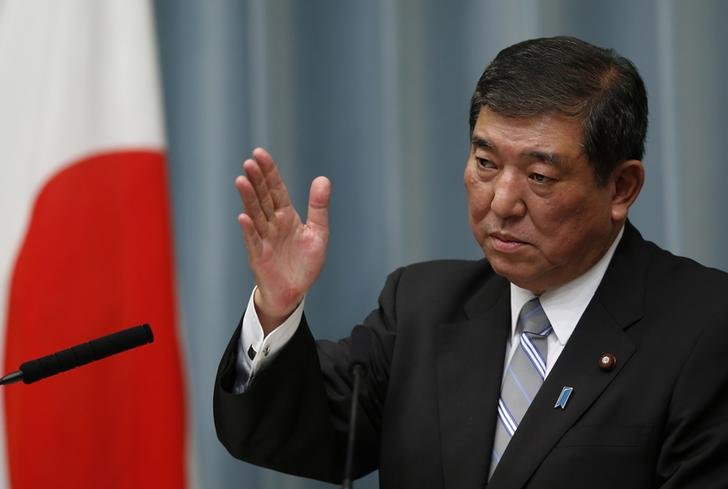
Ishiba’s Bold Move: No LDP Endorsement for Scandal-Hit Members
- Japan’s PM Shigeru Ishiba announced that the LDP will not endorse lawmakers implicated in a slush funds scandal for the upcoming election.
- The decision is a strategic move to restore public faith in the party and its leadership.
- Ishiba outlined the criteria for denying endorsement, including severe punishment and failure to attend a parliamentary political ethics session.
- This move is seen as a significant step in holding party members accountable for their actions and ensuring that only those with a clean record represent the party in the election.
In a significant move that has sent ripples through Japan’s political landscape, Prime Minister Shigeru Ishiba announced that his ruling Liberal Democratic Party (LDP) will not endorse some party lawmakers implicated in a slush funds scandal for the upcoming general election. This decision, which comes amid a scandal that has eroded voter trust, is seen as a strategic move to restore public faith in the party and its leadership.
The LDP, under Ishiba’s leadership, has taken a firm stance against corruption within its ranks. The party has decided not to permit lawmakers disciplined for involvement in the fundraising scandal on the LDP’s proportional representation list for the October 27 election, even if they receive party endorsements for single-seat constituencies. This decision underscores the party’s commitment to maintaining integrity and transparency in its operations and its determination to regain public trust.
In Japan’s House of Representatives election, each voter casts two ballots, one to choose a candidate in a single-seat constituency and the other to select a party for proportional representation. Ishiba’s decision to deny endorsement to scandal-hit members is a clear message to voters that the party is taking decisive action against corruption and is committed to upholding ethical standards in its ranks.
Ishiba’s Criteria for Denying Endorsement
The criteria for denying endorsement have been outlined by Ishiba. Those who were severely punished in April, such as LDP heavyweights Hakubun Shimomura and Yasutoshi Nishimura, who have been suspended from party membership for one year, will not be endorsed. The same applies to Tsuyoshi Takagi, who has been suspended for six months. This move is seen as a significant step in holding party members accountable for their actions and ensuring that only those with a clean record represent the party in the election.
Furthermore, even if not subject to heavy penalties, those who failed to attend a parliamentary political ethics session will not be endorsed. This includes former LDP policy chief Koichi Hagiuda and lawmakers Hiromi Mitsubayashi and Katsuei Hirasawa. This decision underscores the importance the party places on ethical conduct and adherence to party rules and regulations.
Among scandal-hit lawmakers, those who have failed to sufficiently address their local supporters’ concerns and have gained little backing will be denied party endorsement. This move is seen as a way to ensure that only those who have the trust and support of their constituents are fielded in the election.
Ishiba’s Call to Action and Historical Precedents
Ishiba, who was elected Japan’s new prime minister by parliament to replace Fumio Kishida, emphasized the need for the party to respond to the public’s distrust and anger. He called on LDP lawmakers to make efforts to gather votes by squarely facing voters and giving full explanations. This call to action is seen as a way to rebuild trust with voters and restore the party’s image.
As the scandal deepened and criticism mounted, the LDP took action against 39 members whose unreported revenue totaled 5 million yen ($34,000) or more. Of these, 34 received lighter punishments, short of expulsion, suspension from party membership, or exclusion from the party’s endorsement list. This move is seen as a way to hold members accountable for their actions and ensure that only those with a clean record represent the party in the election.
This decision by Ishiba and the LDP is reminiscent of similar moves in other countries where political parties have taken decisive action against corruption within their ranks. For instance, in South Korea, the ruling party has taken a firm stance against corruption, with several high-profile politicians being indicted and convicted for corruption. Similarly, in Taiwan, the ruling party has also taken a hard line against corruption, with several lawmakers being expelled from the party for their involvement in corruption scandals.







Post Comment