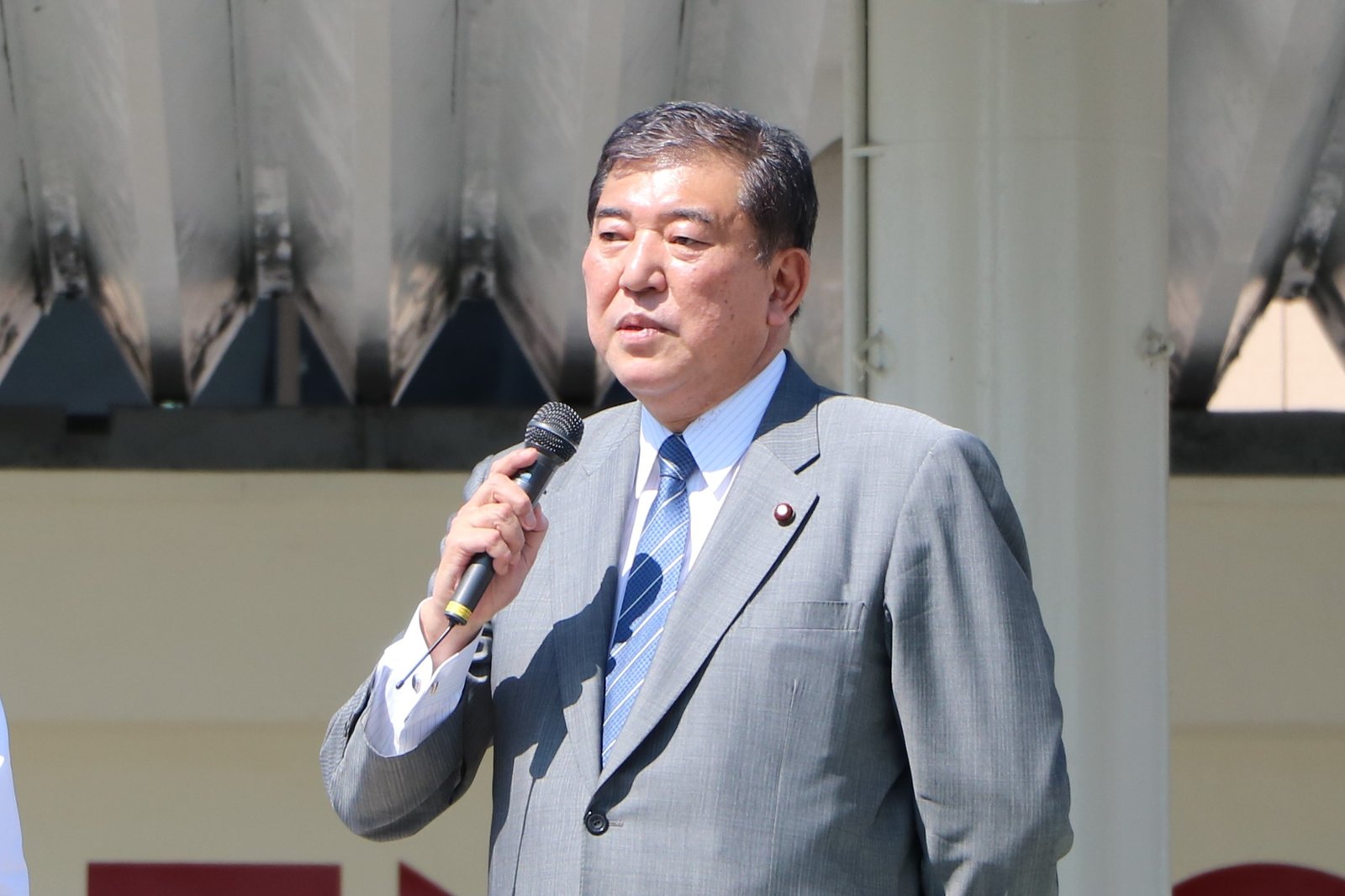
Ishiba’s Approval Stalls, Public Fears US Tariffs
- Japanese PM Shigeru Ishiba’s approval rating stagnates at 35.7% amid concerns over U.S. tariffs.
- The proposed tariffs by U.S. President Trump could significantly impact Japan’s auto industry.
- A survey reveals public support for raising the tax-free annual income threshold to 1.78 million yen.
- The situation mirrors the 2002 U.S. steel tariff, hinting at potential economic and political repercussions.
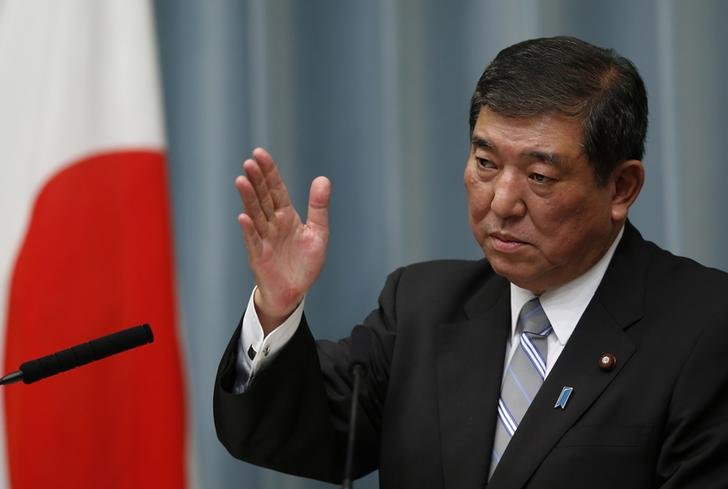
In the bustling metropolis of Tokyo, the political landscape is currently shrouded in uncertainty. The approval rating for Japanese Prime Minister Shigeru Ishiba’s cabinet remains static at 35.7 percent, a negligible change from the previous month’s 36.5 percent. This data, revealed in a recent Kyodo News survey, mirrors the growing economic apprehensions among the Japanese populace, primarily triggered by U.S. President Donald Trump’s proposed tariff plan.
The survey, conducted over the weekend, unveiled that a significant 84.3 percent of respondents expressed concern, ranging from moderate to severe, about the potential impact of U.S. tariffs on the Japanese economy. This concern is not unfounded, considering the significant trade relations between the two nations. The disapproval rating for Ishiba’s cabinet has also seen a rise, climbing to 49.2 percent from 43.1 percent in December, indicating a growing dissatisfaction among the public.
The U.S. tariff plan, as announced by President Trump, is set to target Canada and Mexico initially. On his inauguration day, Trump declared his consideration of imposing a 25 percent tariff on imports from both countries starting February 1.
Impact on the Auto Industry
This move is expected to have a significant impact on the auto industry, given that major Japanese automakers have production bases in both countries and export vehicles to the U.S. market. Furthermore, Trump has also expressed his intention to study the possibility of imposing a 10 percent tariff on imports from China starting February 1.
The potential implications of these tariffs are vast and could lead to a ripple effect in the global economy. The Japanese auto industry, in particular, could face severe repercussions. The industry, which has been a significant contributor to the country’s economy, could see a downturn, affecting jobs and the overall economic health of the nation.
In addition to the economic concerns, the survey also touched upon social issues. A significant 59.4 percent of respondents expressed their support for allowing married couples to use different surnames, a topic that has been a subject of intense debate in parliamentary sessions.
Public Opinion on Tax-Free Annual Income Threshold
However, the support for separate surnames has seen a decline from 67.0 percent in an October survey, following a proposal within the ruling Liberal Democratic Party to enable women to use their maiden names more frequently.
The survey also sought public opinion on the tax-free annual income threshold. The most common response, with 36.4 percent of respondents in favor, was to raise it from the current 1.03 million yen to 1.78 million yen. This figure aligns with a proposal from the Democratic Party for the People, an opposition party whose support the ruling coalition is seeking for its minority government.
The second most popular choice, backed by 27.8 percent of respondents, was an increase to 1.5 million yen, while 21.1 percent favored the plan proposed by the LDP, its junior coalition partner Komeito, and the government, which sets the threshold at 1.23 million yen.
Political Leanings Ahead of Upper House Election
The survey also revealed the public’s political leanings ahead of an upper house election in the summer. Some 26.0 percent expressed their support for the LDP, while 14.9 percent showed support for the DPP, 12.9 percent for the Constitutional Democratic Party of Japan, and 5.8 percent for the Japan Innovation Party. The poll showed overall party support was at 29.6 percent for the LDP, 10.7 percent for the CDPJ, 5.4 percent for the JIP, 14.4 percent for the DPP, and 4.4 percent for Komeito. Among independents, 19.3 percent stated they had no party to support.
The nationwide survey, conducted over two days, reached out to 490 randomly selected households with eligible voters and 3,174 mobile phone numbers. It received responses from 429 household members and 635 mobile phone users. Some areas in Ishikawa Prefecture in central Japan, affected by a powerful earthquake in January last year, were excluded from the survey.
The current situation bears a striking resemblance to the 2002 steel tariff imposed by the U.S. under President George W. Bush. The tariff led to increased steel prices, affecting consumers and industries, and strained relations with trade partners. The current scenario with Japan echoes this historical event, underscoring the potential for significant economic and political repercussions. As Japan navigates these uncertain waters, the world watches closely, waiting to see the ripple effects of these proposed tariffs on the global stage.






Post Comment