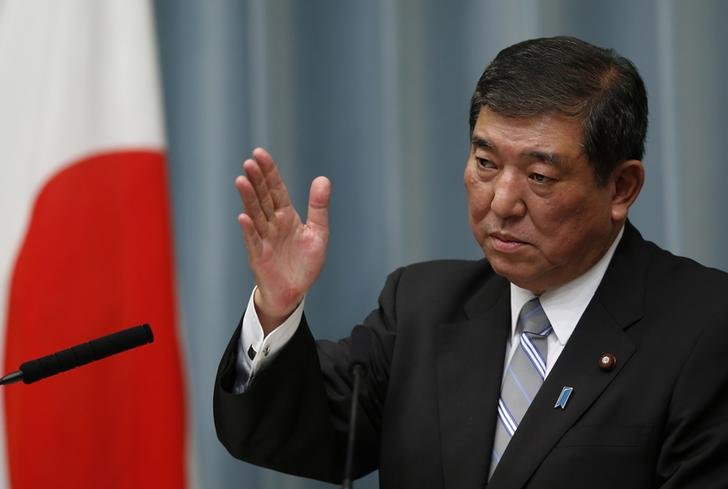
Ishiba Confronts China Over Airspace Breach
- Japan’s PM Shigeru Ishiba demands a “full explanation” from China over an airspace intrusion by a Chinese military aircraft.
- Ishiba expressed concerns about Chinese military activities in the East China Sea and the safety of Japanese nationals in China.
- Despite tensions, both Ishiba and Chinese Premier Li Qiang agreed on the need for “constructive and stable” ties.
- Ishiba’s demand for an explanation and the commitment to maintain ties indicate a potential for diplomatic resolution amidst growing tensions.
In a recent development that has raised eyebrows in the international community, Japanese Prime Minister Shigeru Ishiba has demanded a full explanation from China regarding an airspace intrusion by a Chinese military aircraft. This incident, which occurred in August, marks a significant escalation in the ongoing tensions between the two nations. The demand was made during Ishiba’s first face-to-face meeting with Chinese Premier Li Qiang. The meeting took place on the sidelines of the Association of Southeast Asian Nations (ASEAN) summit in Laos.
This was Ishiba’s first official trip abroad since assuming office last week, and the meeting’s significance was not lost on observers. Ishiba, 67, expressed Japan’s serious concerns about the situation in the East China Sea, including the intensification of Chinese military activities in areas surrounding Japan. The Japanese foreign ministry, in a statement released after the meeting, reiterated these concerns.
Ishiba Highlights Concerns Over Chinese Military Activities
The Japanese Prime Minister also highlighted the passage of China’s Liaoning aircraft carrier between two Japanese islands near Taiwan for the first time last month. This move by China was seen as a significant show of force and a clear message to Japan and its allies. In response, a Japanese warship sailed through the Taiwan Strait for the first time, drawing an angry response from Beijing.
The safety of Japanese nationals in China was another issue that Ishiba raised with Premier Li. This comes in the wake of the fatal stabbing of a Japanese schoolboy in Shenzhen last month, among other recent incidents. Ishiba urged China to ensure the safety of Japanese nationals, highlighting the growing concerns about their well-being.
In addition to these issues, Ishiba also expressed Japan’s serious concerns about the situations in the South China Sea, Hong Kong, and the Xinjiang Uyghur Autonomous Region. He stressed the importance of peace and stability in the Taiwan Strait, a region that has been a source of constant tension between China and the international community.
Japan and China Agree on Need for Constructive and Stable Ties
Despite these serious concerns, both Ishiba and Li agreed on the need for constructive and stable ties. They committed to maintaining multi-layered communications between Japan and China at all levels, including at the summit level. This agreement indicates a willingness on both sides to engage in diplomatic dialogue to address these issues.
In a related development, Beijing announced last month that it would gradually ease a ban on Japanese seafood imports imposed in 2023 over the release of treated wastewater from the stricken Fukushima nuclear plant. This move is seen as a positive step towards easing tensions between the two nations.
Ishiba, who has in the past called for a NATO-style Asian pact with the unstated goal of offering protection against China, is keen on easing tensions with China. He is reportedly looking forward to a meeting with Chinese President Xi Jinping. However, Li made a swipe at this proposal during talks between ASEAN leaders and China, Japan, and South Korea. He warned of the danger of attempts to introduce bloc confrontation and geopolitical conflicts into Asia.
In conclusion, the recent developments in the East China Sea and the South China Sea indicate a growing tension between China and its neighbors, particularly Japan. The demand for a full explanation by Japanese Prime Minister Ishiba from China regarding the airspace intrusion is a clear indication of Japan’s growing concerns. However, the commitment to maintain constructive and stable ties by both nations offers a glimmer of hope for diplomatic resolution of these issues. The international community will be closely watching the developments in this region, given its strategic importance and the potential for escalation.








Post Comment