Investors Flee as China’s Market Rally Fizzles Out
- China’s stock market saw a significant slump, with Shanghai’s benchmark down by 6.6% and Hong Kong’s index losing 1.5%.
- The drop came as investors sold off shares following disappointing economic stimulus plans from Beijing.
- Despite the downturn, the Shanghai Composite is still up 5.2% from a year ago and Hong Kong’s index is up nearly 18% from a year earlier.
- The slump serves as a reminder of the volatility of global financial markets and the importance of government policies in shaping market trends.
In a surprising turn of events, China’s stock market experienced a significant slump on Wednesday. Shanghai’s benchmark was down by 6.6%, and Hong Kong’s index lost 1.5%. This sudden drop came as investors rushed to sell off shares to secure profits following recent rallies, which were fueled by hopes for substantial economic stimulus. However, the economic stimulus plans from Beijing officials fell short of the high expectations that had been set after the central bank and other government agencies announced various policies aimed at reviving the struggling property market and spurring faster economic growth.
These policies, announced in late September, sparked a rally that has since fizzled out. The Shanghai Composite, which had gained 4.6% on Tuesday as it reopened from a weeklong national holiday, lost 6.6% to 3,258.86. The CSI300 Index, which tracks the top 300 stocks traded in the Shanghai and Shenzhen markets, gave up 6.2%. The benchmark in the smaller market in Shenzhen dropped 8.1%.
Hong Kong’s Hang Seng index shed 1.6% to 20,593.98, following a plunge of more than 9% on Tuesday. Despite the recent downturn, the Shanghai Composite is still up 5.2% from a year ago and more than 10% in the past three months. Hong Kong’s index is up nearly 18% from a year earlier.
Global Market Reactions and Expectations
The disappointment among investors was largely due to the lack of new stimulus measures. Many market participants had hoped that Beijing’s fiscal policies would follow in the footsteps of the financial ‘bazooka’ delivered in late September. However, the recent announcements were seen as a step-down, causing a wave of disappointment and subsequent sell-off.
In contrast to the downturn in China, other Asian markets saw gains. In Tokyo, the Nikkei 225 index advanced 0.9% to 39,277.96. Shares of the Japanese retailer Seven & i Holdings gained 4.7% after media reported that Canadian convenience store operator Alimentation Couche-Tard had increased its takeover bid by about 20%.
Japan’s parliament was due to be dissolved on Wednesday to pave the way for a general election. Prime Minister Shigeru Ishiba is seeking to consolidate support after taking office last week, amid signs the Liberal Democrats’ ruling coalition remains shaky after Ishiba’s predecessor, Fumio Kishida, stepped down following a slew of scandals among the party’s lawmakers.
Oil Prices and Currency Trading Amid Market Volatility
Australia’s S&P/ASX 200 gained 0.1% at 8,187.40. South Korea ’s markets were closed for a public holiday. On Tuesday, the S&P 500 rallied 1% to 5,751.13. The Dow Jones Industrial Average rose 0.3% to 42,080.37, while the Nasdaq composite led the way with a 1.4% rally to 18,182.92.
The 10-year Treasury yield edged down to 4.02 from 4.03% late Monday. The two-year yield, which more closely tracks expectations for what the Federal Reserve will do with overnight interest rates, slipped to 3.96% from 3.99%, late Monday, though it’s still near its highest level since August.
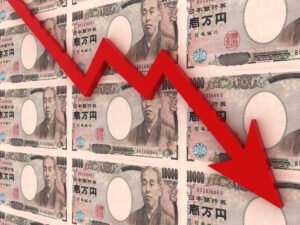
Oil prices extended gains as Hezbollah fired another barrage of rockets into Israel on Tuesday which heightening concerns over escalating tensions in the Middle East. Benchmark U.S. crude oil added 54 cents to $74.11 per barrel. Brent crude, the international standard, rose 64 cents to $77.82 per barrel. In currency trading, the U.S. dollar edged up to 148.38 Japanese yen from 148.20 yen. The euro fell from $1.0959 to $1.0970.
The recent slump in China’s stock market serves as a reminder of the volatility and unpredictability of global financial markets. It underscores the importance of government policies in shaping market trends and the need for investors to stay informed and vigilant. This event is reminiscent of the 2015 China Stock Market Crash when the Shanghai Stock Exchange lost a third of the value of A-shares within one month. As in the current situation, the 2015 crash was triggered by the bursting of an equity bubble and was also followed by significant government intervention.




Post Comment