India protesters press on after crackdown, pressuring Modi
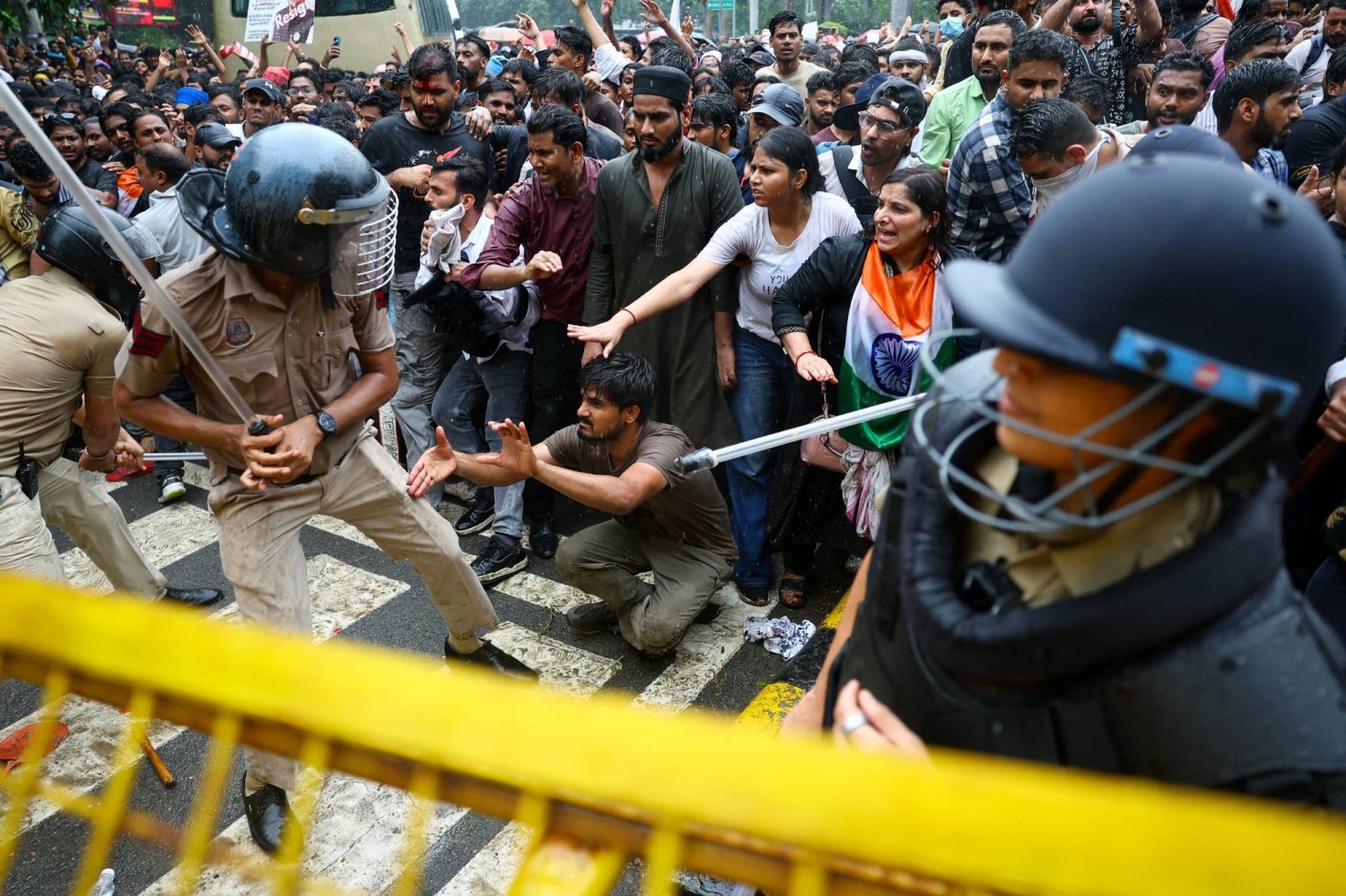
Indian protesters have vowed to press on after police moved to block thousands of demonstrators from marching on Parliament, adding pressure on Prime Minister Narendra Modi’s government.
Students packed roads in central New Delhi on Monday in the city’s largest demonstrations since the farmer protests in 2021, demanding accountability over exam paper leaks and broader failures in the education system. Television footage and social media posts showed police using tear gas and batons against protesters.
By Tuesday morning, streets around the Parliament remained heavily blockaded by police as lawmakers prepared to return for the second day of the session. The student protesters, led by the Cockroach Janta Party, have since retreated to a designated demonstration site about 2 kilometers away from the Parliament, where they’ve been gathering for several weeks already.
Leaders of the Cockroach Janta Party, a viral satirical online campaign that has evolved into a protest movement, said on Monday that they met with Jagat Prakash Nadda, a senior leader in Modi’s Bharatiya Janata Party, who later wrote on X that he had “requested all the protesters to end their sit-in.”
In a separate post, the Cockroach Janta Party said it would continue its “peaceful” protests until its “demands are met.”
While the group’s main demand is the resignation of Education Minister Dharmendra Pradhan, many demonstrators in central Delhi directed their anger at Modi, reflecting broader frustration with his government. Opposition groups have backed the protesters and also called for the education minister to step down.
Human rights groups criticized the police response to the demonstrations. Telecom companies told customers on Monday that internet services would be temporarily suspended in parts of New Delhi on government orders. Authorities also halted metro services in some areas, further restricting protesters’ movements.
“The images and reports emerging from the protest at Jantar Mantar show how peaceful dissent is being suppressed in India,” Amnesty International India’s Chair of Board Aakar Patel said. Human Rights Watch described the demonstrations as “one of the biggest anti-government protests in recent years” and urged police to exercise restraint.
In a statement, Delhi Police said protesters had “displayed unruly, aggressive and violent behaviour” and that over 118 police personnel were injured.
Inside the Parliament on Monday, opposition lawmakers repeatedly disrupted proceedings by shouting slogans, forcing both houses to adjourn several times.
The opposition is also planning to use the Parliament session this week to question Modi’s government over rising costs in the economy, and allegations of corruption at the Ram Temple in Ayodhya, a marquee project of the BJP. Surging crude prices and lower rainfall due to a weak monsoon have emerged as twin risks for inflation and the broader economy.
Modi has consolidated power this year with recent state election wins, putting the 75-year-old politician in a position to potentially rule India into the next decade. Still, the Cockroach protests signal brewing discontent that will test Modi’s BJP at the polls — including in Uttar Pradesh, India’s most populous state, which is due to hold a vote by next May.
“India’s democracy is shaped by the ballot, not by orchestrated violence on the streets,” Amit Malviya, a senior BJP member, posted on X. “And the people’s mandate cannot be overturned by those who refuse to accept it.”
The protesters began a sit-in in central Delhi on June 20, which included a hunger strike from prominent activist Sonam Wangchuk. They had called for a march on Parliament on Monday to mark the start of the monsoon session.








Post Comment