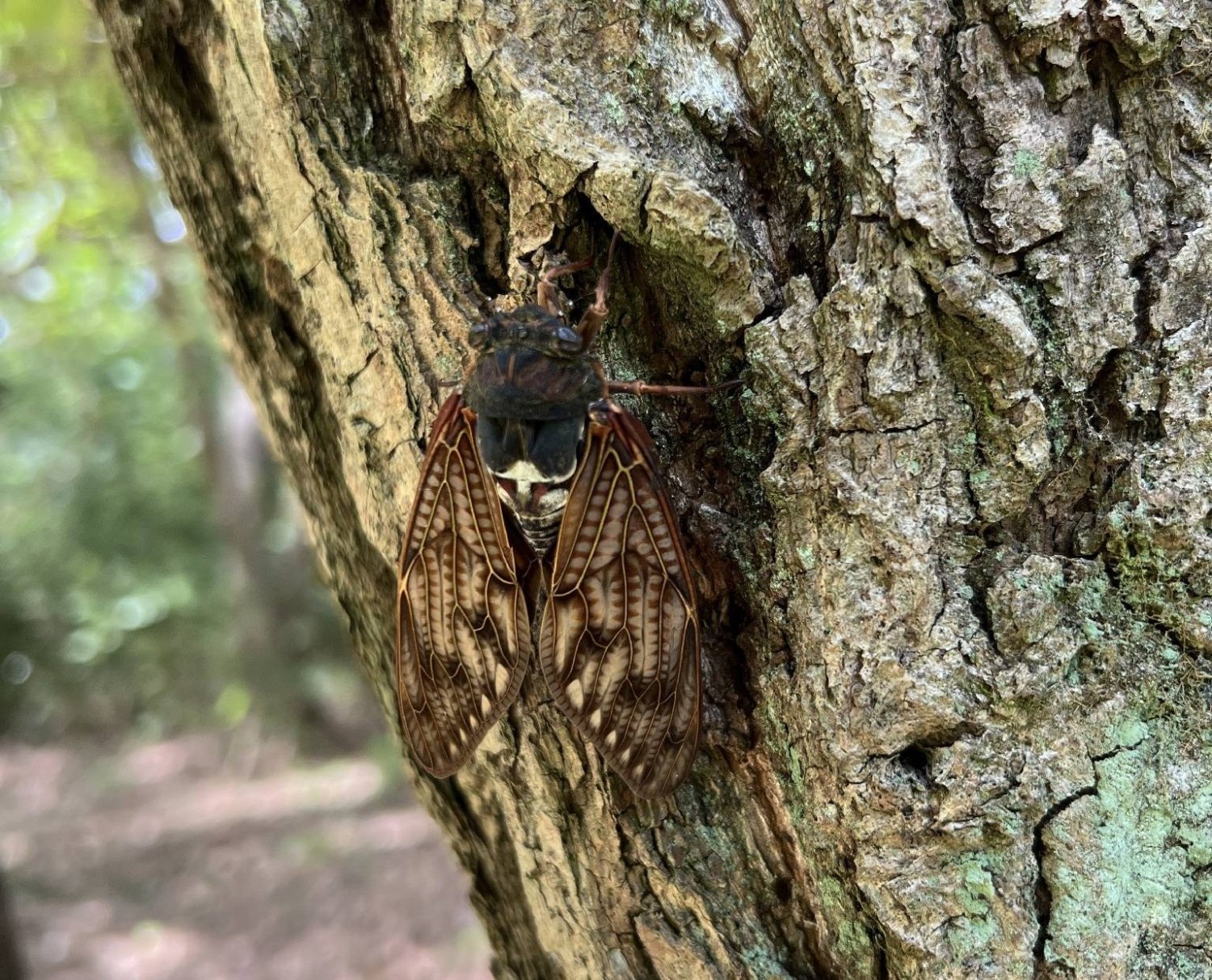
City lights and sweltering summer heat keep some cicadas singing after dark
For many in Japan, cicada cries are as much an integral part of summer as fireworks, shaved ice and sweltering heat. And, according to researchers, some may be extending their performances well past sunset in Tokyo and other urban areas.
A study using automated recording devices found that two common species continued calling at night in urban areas, but not in protected green spaces without artificial lighting.
The findings suggest that streetlights and higher urban temperatures may be altering cicadas’ daily rhythms, according to researchers from Tokyo Metropolitan University, Azabu University and Tamagawa University. The study was published April 13 in Ecological Research, an English-language journal of the Ecological Society of Japan.
Researchers placed autonomous recording units at six locations in Tokyo and Kanagawa Prefecture from June 22 through Aug. 31, 2024. The devices recorded continuously at the Minami-Osawa campus of Tokyo Metropolitan University in the city of Hachioji in western Tokyo; Tamagawa University in the city of Machida, also in western Tokyo; Azabu University in the city of Sagamihara in Kanagawa Prefecture; and three protected green spaces in Machida.
The recordings were analyzed in one-hour segments, allowing researchers to identify six cicada species and compare when they called.
Each species appeared to keep its own summer schedule. Higurashi, also known as evening cicadas, tended to call around dawn and dusk, while kumazemi — bear cicadas, named for their large size — were most active in the morning.
The most striking difference involved aburazemi — large brown cicadas — and nii-nii-zemi (kempfer cicadas). Both called during the day in urban and green areas, but they were also recorded after dark at urban sites. Their calls stopped around sunset in green spaces without nighttime lighting.
Other species, including minminzemi (named after its high-pitched cry), higurashi, kumazemi and tsukutsukubōshi (also known as the elongate cicada), were rarely heard at night in either environment.
According to the researchers, the results show that urbanization may affect not only where cicadas live, but also when they make themselves heard. Their late-night cries could even reshape the urban soundscape by overlapping with crickets and other nocturnal insects.
The recording method used in the study could also be applied to other animals identifiable by their calls, the research team said, including crickets and grasshoppers, helping track biodiversity and assess environmental changes in both cities and green spaces.












Post Comment