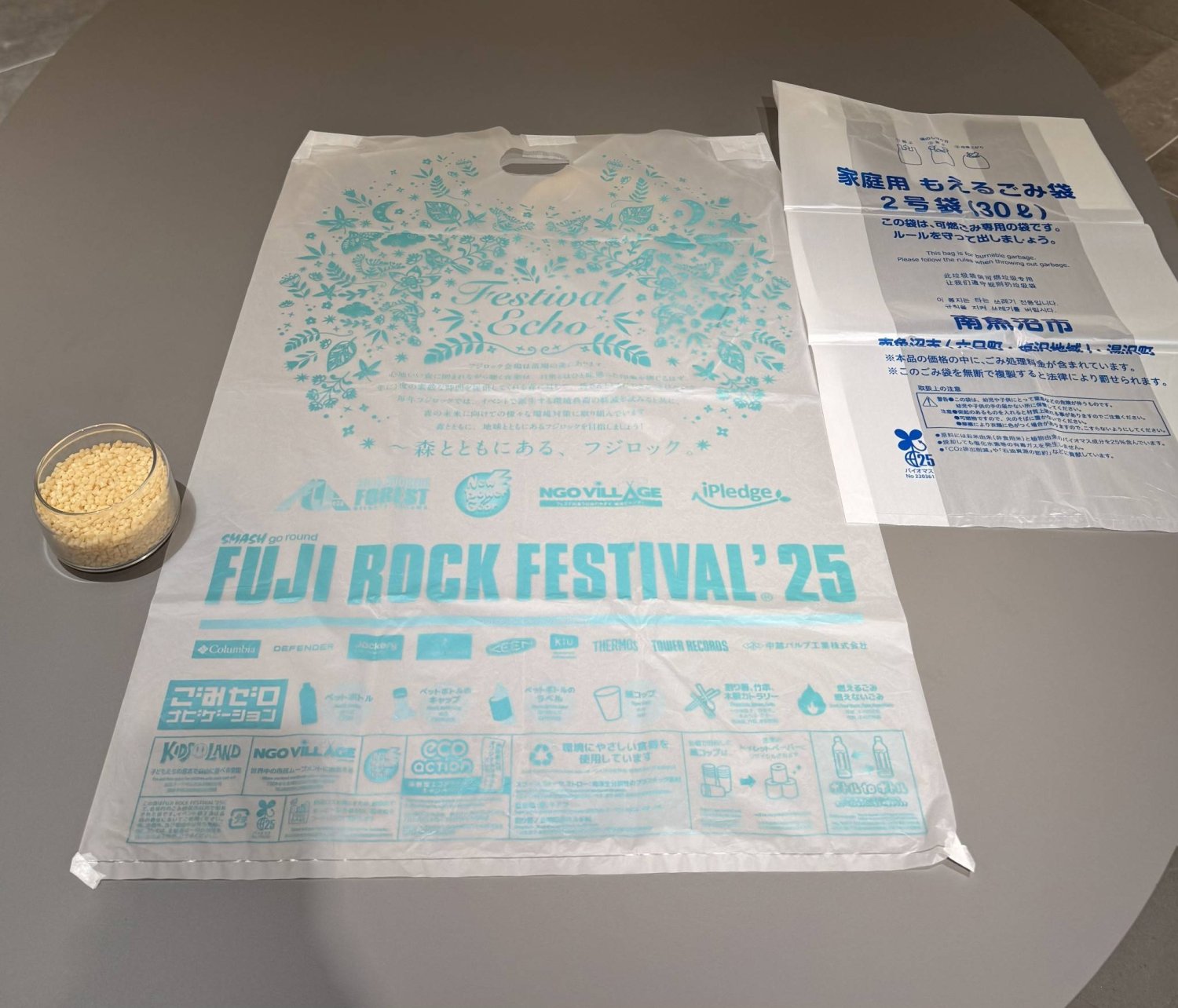
Bioplastic use rising in Japan amid naphtha woes
The use of biomass plastic, derived from renewable resources such as plants, to make garbage bags is spreading in Japan in response to supply disruptions of naphtha due to the Middle East conflict.
The “naphtha shock” exposed the risk of relying on Middle East crude oil for industrial and daily goods materials. The key is whether Japan can expand the use of nonfossil raw materials and decrease its dependence on materials derived from Middle East crude oil and petroleum.
Shinji Okuda, chief operating officer of Rice Resin, a manufacturer of bioplastic made from rice in Namie, Fukushima Prefecture, said that requests for consultations increased three to five times after the Middle East conflict began.
The company annually produces some 500 metric tons of bioplastic, which contains up to 70% rice unsuitable for consumption, such as old government-stockpiled rice. It sells garbage and shopping bags made from the bioplastic to municipalities and retailers.
The city of Fukagawa in Hokkaido is considering introducing Rice Resin garbage bags on a trial basis after no organization participated in a bidding to supply garbage bags in April.
Fukagawa decided to switch from polyethylene bags used at present, because the supplier said that it could not procure raw materials to make the bags. Rice Resin bags are expected to be introduced as early as November.
Convenience store operator FamilyMart doubled the proportion of biomass materials, mainly sugarcane, used in shopping bags at its stores to 50% in mid-June.
The move not only contributes to stable procurement of raw materials but is expected to reduce the company’s annual consumption of petroleum-derived plastic by some 1,100 metric tons.
The biggest barrier to the spread of bioplastics is their higher costs than those of petroleum-based products.
But the price gap between the Rice Resin bioplastic and petroleum-derived materials has shrunk from up to twice due to naphtha price increases that stemmed from the Middle East conflict.
The Rice Resin bioplastic has “a great potential” as a future option in terms of risk diversification, Okuda said.
“The project can also provide support to agriculture amid declining rice consumption,” he said, stressing the advantage of using domestic materials.
An official of Fukagawa said that the city wants to make the most of its local uniqueness by using bags made from rice as it is one of the biggest rice-producing areas in Hokkaido.
Prime Minister Sanae Takaichi’s administration aims to expand the use of domestic biomass to reduce her country’s reliance on specific countries and regions for materials and energy as it designates synthetic biology and bio-related technologies as one of its 17 strategic fields in its new growth strategy, to be drawn up this month.












Post Comment