Asian Shares Dip, Yen Weakens Amid Global Uncertainty
Asian shares have been observed to be mostly lower, a trend that followed the stalling of U.S. stocks as investors eagerly await developments in the Middle East. This news comes amidst a backdrop of heightened tensions in the region, with the world waiting to see how Israel will respond to Tuesday’s missile attack from Iran. The potential for a broadening war is a concern, given that Iran is a major producer of oil, and any conflict could affect neighboring countries integral to the flow of crude.
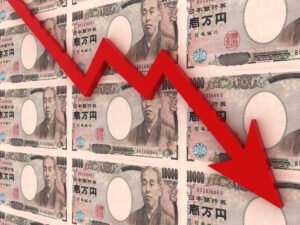
The U.S. dollar has gained against the Japanese yen, a development that has been attributed to officials downplaying the likelihood of an interest rate hike in the near future. This has had a positive impact on Tokyo’s Nikkei 225 index, which gained 2% to 38,552.06. The dollar traded at 146.51 Japanese yen, up from 146.41 yen late Wednesday.
The dollar had been trading around 142 yen after the ruling Liberal Democrats chose Shigeru Ishiba to head the party and succeed Fumio Kishida as prime minister. Ishiba had expressed support for the central bank’s recent moves to raise its near-zero benchmark interest rate, which stands at around 0.25%.
Currency Fluctuations and Market Reactions
This led traders to bet that the yen would gain in value. However, a meeting between Ishiba and Bank of Japan Gov. Kazuo Ueda indicated that the central bank did not view further rate hikes as suitable for the economy at this time. This prompted a flurry of selling of yen, which benefits big export manufacturers.
Stephen Innes of SPI Asset Management commented on the situation, stating, “when Ishiba hinted that growing global risks should keep the BOJ firmly grounded, yen bulls hit the exits faster than you can say ‘sayonara.’” This highlights the sensitivity of the market to geopolitical developments and the potential impact of policy decisions on currency values.
Elsewhere in Asia, Hong Kong’s Hang Seng dropped 1.4% to 22,124.37 as investors sold shares to lock in profits after it roared 6.2% higher a day earlier. This surge was driven by a wave of investor enthusiasm over recent announcements from Beijing to rev up the Chinese economy.
Wall Street and Corporate Performance
In the U.S., Wall Street benchmarks ended little changed amid uncertainty over conflict in the Middle East. The S&P 500 gained less than 1 point, to 5,709.54, while the Dow Jones Industrial Average edged up 0.1% to 42,196.52. The Nasdaq composite added 0.1% to 17,925.12.
In the bond market, Treasury yields rose after a report by ADP Research indicated that hiring by U.S. employers outside the government may have been stronger last month than expected. This could auger well for the government’s more comprehensive report on the U.S. job market due out Friday.
In the corporate world, Nike sank 6.8% even though the athletic giant reported stronger profit for the latest quarter than analysts expected. Its revenue fell short of forecasts, and the slump shows how much work incoming CEO Elliott Hill has in making the brand cool among customers. Tesla sank 3.5% despite reporting an increase in its deliveries of electric vehicles during the latest quarter, the first time that’s happened this year. The number topped analysts’ forecasts, but investors may have been expecting an even bigger increase.
In conclusion, the global financial markets are currently in a state of flux, with geopolitical tensions, economic policy decisions, and corporate performance all playing a role in shaping investor sentiment and market trends. As the world continues to navigate these complex dynamics, the importance of careful analysis and informed decision-making cannot be overstated.








Post Comment