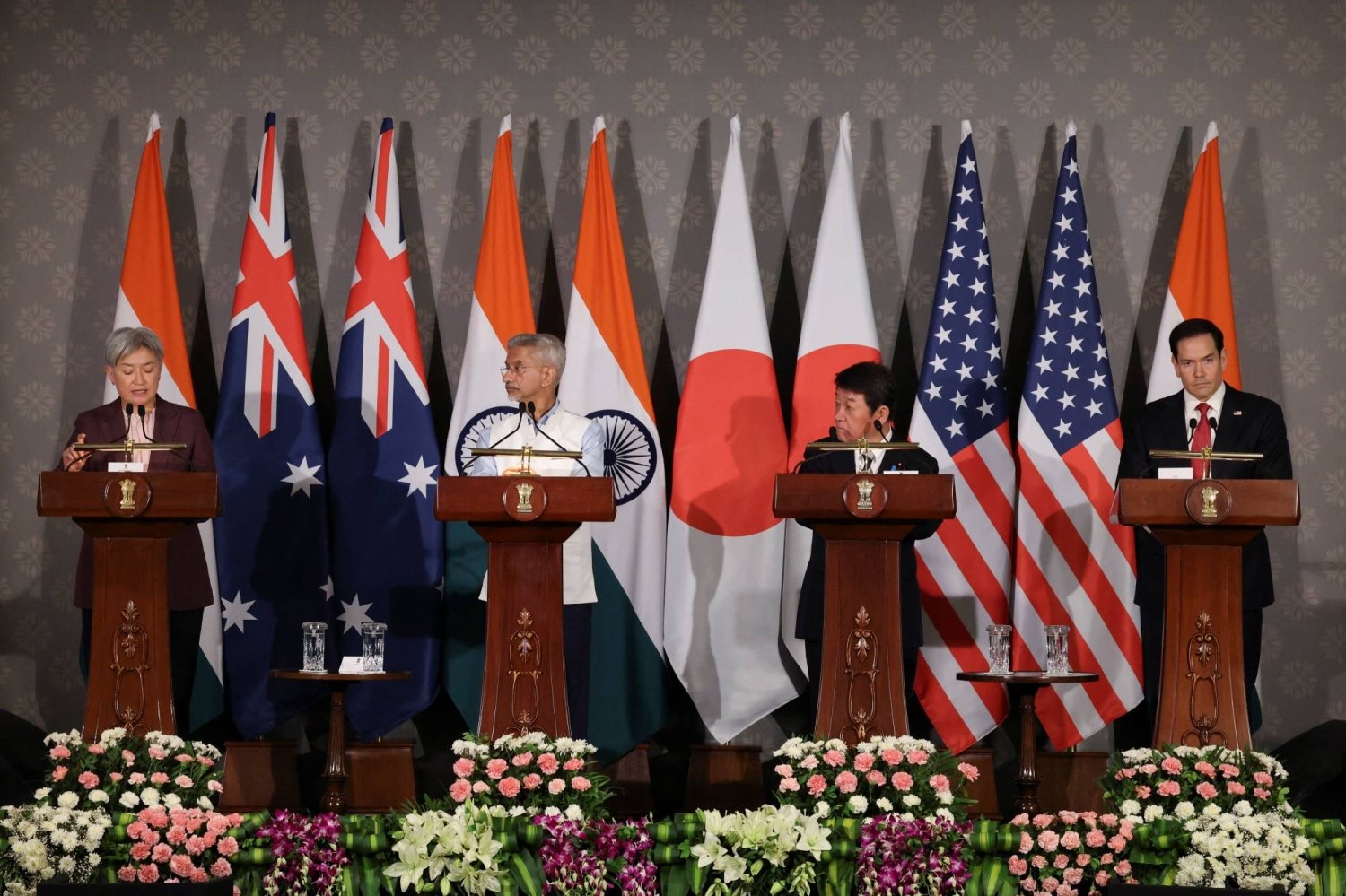
A new ‘Quad’ for an ever more complex Indo-Pacific?
The Indo-Pacific has become a laboratory for minilateral diplomacy.
The “Quad,” AUKUS, the SQUAD, the Five Eyes, the Japan-U.S.-Republic of Korea trilateral and a growing constellation of flexible security partnerships have joined ASEAN-led institutions as central pillars of the region’s evolving strategic architecture. Faced with increasingly complex security challenges, countries are no longer relying solely on traditional alliances or large multilateral organizations. Instead, they are building smaller, agile coalitions around shared interests and complementary capabilities.
Considering this trend, the recent establishment of a ministerial framework between Japan, Australia, Canada and New Zealand deserves closer scrutiny. Some may see it as simply an extension of either the Quad or a “Quad Plus,” but this would miss its importance entirely. It is not a new iteration of the Quad — or even an attempt to expand into a larger entity. Nor should it seek to become one. What it is instead is a separate and distinct quadrilateral partnership that fits a particular gap in the increasing interconnectivity of security architectures in the Indo-Pacific.











Post Comment