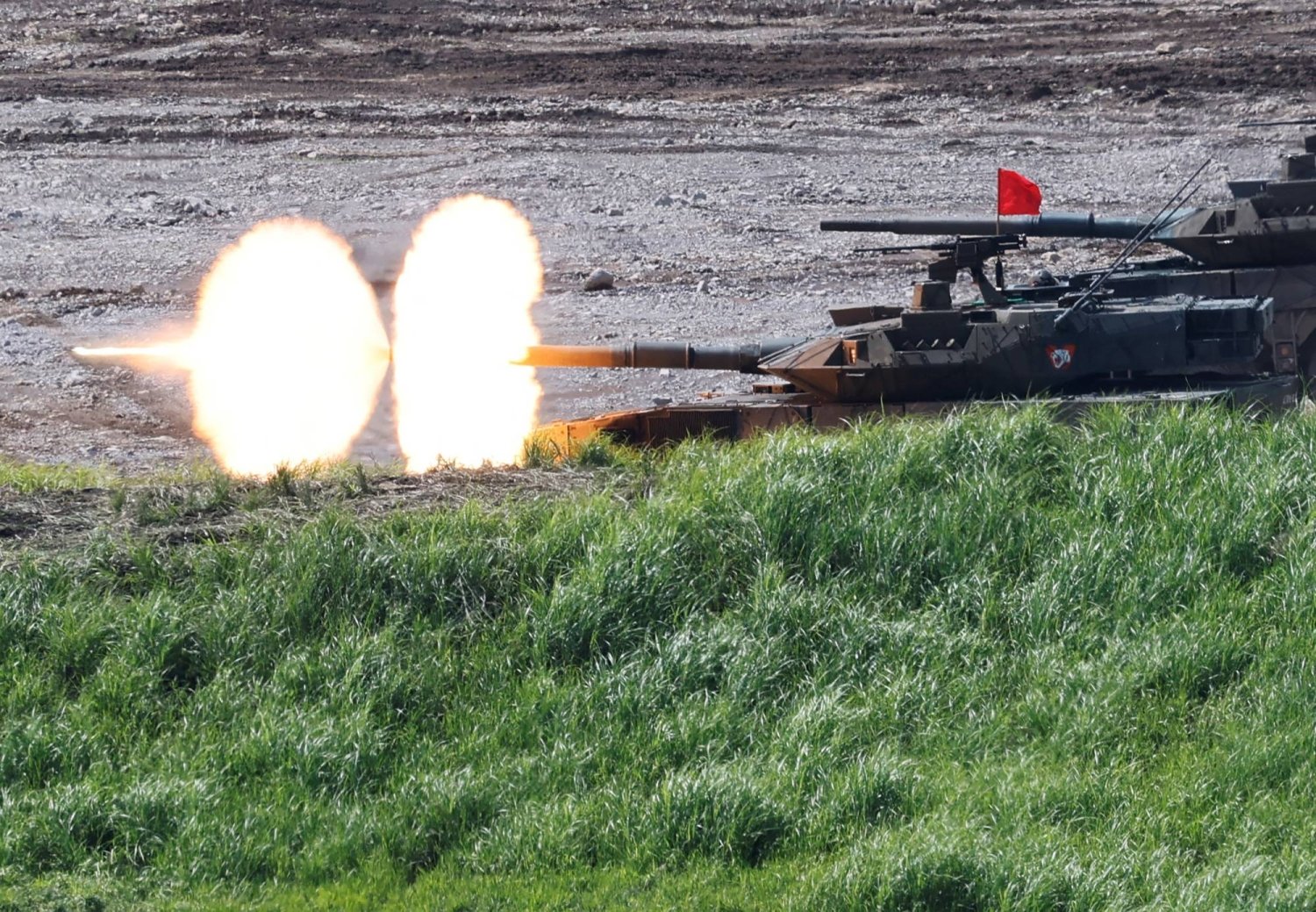
Japan reveals hint of new defense spending target in fiscal blueprint
Japan just got a tiny bit closer to revealing how substantial its increases in defense spending in the coming years are expected to be.
The government’s annual economic and fiscal policy guidelines approved by the Cabinet on Tuesday did not lay out a specific numerical defense spending target for Japan — but it did offer a marker, referencing goals announced by NATO and two other U.S. allies and pledging to “transform the country’s defense capabilities within five years.”
This marker is expected to lay the foundation for a clearer target to be outlined in the country’s three key national security documents that are scheduled to be revised by the year-end.
Citing China’s military buildup, North Korea’s nuclear and missile developments, as well as the war in Ukraine, the guidelines say that “the security environment surrounding Japan is changing at an accelerating pace, becoming more complex and serious.”
But the guidelines also say that security challenges are “diversifying,” an apparently veiled reference to U.S. President Donald Trump’s push for Japan to hike defense budgets and uncertainty around his administration’s policy toward the Indo-Pacific.
“The United States is demanding a greater role from its allies, and NATO countries, South Korea, Australia and others are strengthening their security-related efforts, such as setting targets to increase defense spending in the medium- to long-term,” the document says, with a footnote delineating the alliance and two countries’ defense outlays.
“In this context, Japan needs to first strengthen its diplomatic capabilities and proactively strengthen its defense capabilities, while at the same time, organically linking these with economic, technological, intelligence and human resource capabilities to boost its overall national strength,” the guidelines say.

Under pressure from Trump, NATO nations agreed last year to boost core defense spending to 3.5% of gross domestic product by 2035. Similarly, South Korea won plaudits from Trump administration officials in 2025 for pledging to hike defense outlays to 3.5% of GDP “as soon as possible,” though it is expected to take Seoul until 2035 to reach that target.
In April, following U.S. demands that Australia dole out more cash, Canberra announced it was raising military spending to 3% of GDP by 2033 — the nation’s biggest ever peacetime hike in defense outlays.
Trump administration officials have repeatedly cited the 3.5% of GDP figure as a model for allies.
Japan said in April that defense spending had made progress toward its 2% of GDP goal, with the defense-related budget for this fiscal year set to rise to just short of that threshold, at 1.9%.
This calculation, however, was made against GDP in fiscal 2022, when the target was laid out and when the purchasing power of the yen was much stronger than it is now. If adjusted using the projected GDP for fiscal 2026, the ratio would stand at around 1.5%.
With the release of Japan’s National Security Strategy in late 2022, Tokyo outlined an ambitious five-year plan through the fiscal year ending in March 2028 allocating a total of ¥43 trillion for defense-related spending as it takes aim at the 2% target.
Until 2022, Japan had long maintained an informal cap on defense spending at around 1% of GDP as part of its exclusively defense-oriented security policy under its pacifist Constitution.
The absence of a clear figure aligns with the ruling Liberal Democratic Party’s recommendations for revisions to the three security documents submitted to the government in June.
Although both Washington and Tokyo deny the U.S. has demanded higher defense budgets, U.S. Defense Secretary Pete Hegseth delivered a veiled warning to Tokyo in May, saying that while spending was “headed in the right direction,” more must be done.
“We have high expectations of our Japanese allies, and together we can and must each pull our weight,” he said, reiterating the 3.5% figure.
Japanese officials have said that any decision would be a sovereign one, driven by the capabilities required, not a pre-set amount.
Whatever the case, any substantial increase in defense spending faces a bumpy road ahead. Not only is there growing uncertainty about how to secure funds for any hike, but Tokyo is also getting far less bang for its buck amid the yen’s diminishing value.











Post Comment