The Indian Spiritual Movement That Rebuilt Lives in War Zones and Drought Villages Just Turned 45. The World Is Paying Attention.
From Syrian refugee camps to Kosovo’s trauma wards to India’s depleted rivers — a quiet force in global humanitarian work marks a milestone
The boy from Syria could not sleep. He was 12 years old when gunmen killed two of his brothers in front of him. He escaped the violence. The memories did not leave him.
It was not medication that helped him rest. It was not a clinic or a counselor in any conventional sense. It was ten minutes of guided breathing, taught by a volunteer from an Indian nonprofit that most of the world has never heard of — but whose work has quietly reached more than 800 million people across 182 countries over the past four and a half decades.
“These ten-minute meditations are worth a night’s sleep because I am finally able to rest,” the boy told his teacher.
That account emerged this week in Bengaluru, the southern Indian technology hub, where the Art of Living Foundation celebrated its 45th anniversary before a gathering of more than 100,000 people — and where Prime Minister Narendra Modi arrived to deliver the keynote address.
Bengaluru’s Other Industry
Japan knows Bengaluru as a technology city. The outsourcing capital. The place that built enterprise software infrastructure for corporations from Tokyo to Osaka and beyond. Japanese firms have long maintained deep commercial ties with the city’s IT sector.
What this week’s gathering reminded the world is that Bengaluru produces something else entirely.
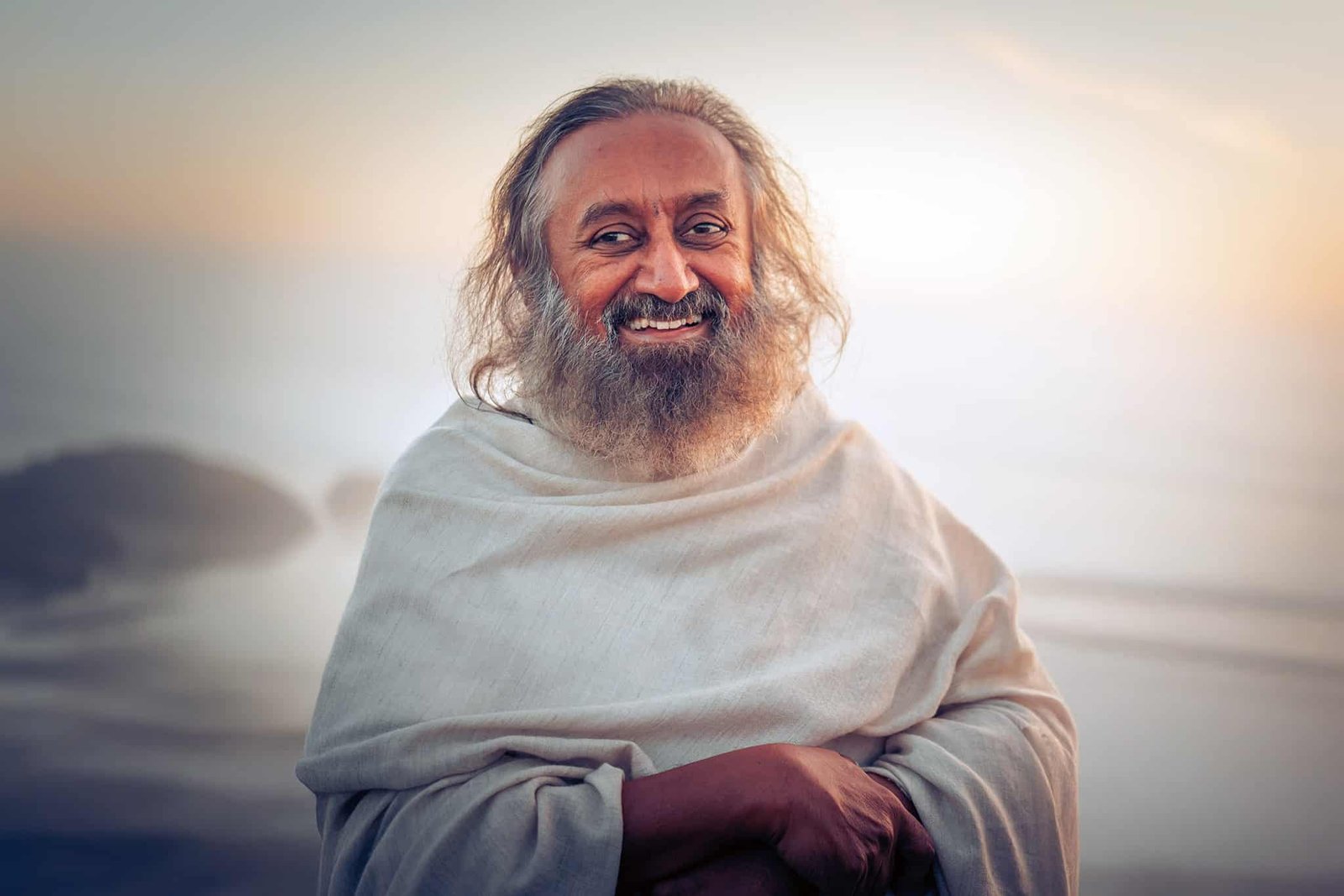
The Art of Living Foundation was established in 1981 by Gurudev Sri Sri Ravi Shankar, who turned 70 this week, on a single campus on the outskirts of the city. It now operates across 182 countries, running programs in breath-based meditation, trauma relief, rural development, environmental conservation and conflict resolution. Its flagship practice, Sudarshan Kriya — a structured rhythmic breathing technique developed by Gurudev Sri Sri Ravi Shankar — has drawn growing clinical attention from researchers in Japan, the United States and Europe as a non-pharmacological intervention for stress and anxiety.
On Sunday, Modi inaugurated the Dhyan Mandir, a newly constructed large-scale meditation hall at the foundation’s international headquarters. He also launched nine service initiatives spanning mental wellbeing, reforestation, tribal welfare, healthcare and digital literacy.
A global meditation for world peace, led by Gurudev Sri Sri Ravi Shankar, is scheduled for May 13 and will be live-streamed worldwide.
Work in Conflict Zones
For Japanese readers with a constitutional commitment to pacifism and a long institutional interest in post-conflict reconstruction across Asia, the foundation’s record in conflict zones is notable.
In Kosovo, following a war that claimed more than 13,000 lives and displaced hundreds of thousands, Art of Living volunteers conducted trauma relief programs inside refugee camps. Flora Brovina, then a parliamentary delegate and director of the Center for Mothers and Children, observed that the program helped women process shame, guilt, numbness and isolation. Kosovo’s Ministry of Health subsequently recommended nationwide training for mental health workers in the foundation’s trauma relief methods.
In Iraq in 2008, Gurudev Sri Sri Ravi Shankar brought Shia, Sunni and Kurdish leaders into dialogue at a moment when such meetings carried considerable personal risk. In India’s northeast, a foundation-organized conference brought 67 militant groups — many with opposing ideologies — onto a single platform to discuss peace.
“My anger has turned into a smile,” said one former militant who attended. “Earlier, it was difficult to imagine a normal life. Today, I’m leading a peaceful life.”
Prison rehabilitation programs run by the foundation have reached more than 800,000 inmates worldwide. Expansion announced this week will extend that work to 550 facilities across India, covering an estimated 60,000 inmates and staff.
Water and the Land
Japan, which has channeled significant development assistance into water infrastructure across Asia, may find particular interest in the foundation’s environmental record.
Since 2013, the Art of Living Foundation has led a water conservation program across India that has reached more than 34.5 million people in 19,400 villages. The initiative has constructed over 92,000 groundwater recharge structures, removed 270 lakh cubic metres of silt, restored 59,000 square kilometres of land and conserved an estimated 174 billion litres of water.
An independent third-party assessment found groundwater levels in areas where the foundation intervened were 20 percent higher than in comparable areas without intervention. Maharashtra’s chief minister has publicly credited the program, noting that villages previously dependent on water tankers have become self-sufficient.
On education, a single rural school near the original Bengaluru campus has expanded into a network of 1,356 schools serving more than 120,000 children across more than 2,000 villages. Many are first-generation learners receiving free schooling. The foundation has also worked with more than three million farmers to promote natural farming practices and reduce chemical dependence, addressing both soil degradation and the financial distress linked to agrarian debt.
Modi and Gurudev Sri Sri Ravi Shankar
In his keynote address, Modi described Gurudev Sri Sri Ravi Shankar as “a living embodiment of India’s timeless tradition of giving — giving knowledge, giving peace, giving hope.”
He drew a direct line between the foundation’s work and India’s national development ambitions. “A developed India will be built by youth who are mentally calm, socially responsible and sensitive towards society,” Modi said. “Spiritual well-being, mental health, yoga and meditation have a very important role in this journey.”
In a personal remark directed at Gurudev Sri Sri Ravi Shankar, Modi told the crowd: “I am yours, and I am where I am because of you.”
Gurudev Sri Sri Ravi Shankar, addressing the prime minister in turn, said: “In less than ten years, you transformed India from a country that asked, into a country that gives.”
A Principle, Not an Institution
Gurudev Sri Sri Ravi Shankar has consistently resisted framing his life’s work in institutional terms. “The Art of Living is more of a principle, a way of living life to its fullest,” he has said. “Its core value is to find peace within oneself and to unite people of all cultures, traditions, and nationalities.”
For Japan — a society navigating its own pressures of demographic decline, workplace stress, social isolation and a quiet but persistent mental health crisis — that framing carries practical weight. The Art of Living operates centers across Japan, and its stress-relief and leadership programs have drawn participants from corporate, academic and public sector environments.
Japan and India share a strategic partnership that has deepened considerably over the past decade, spanning infrastructure investment, defense cooperation and technology exchange. Sunday’s gathering in Bengaluru added a dimension to that relationship that trade figures and diplomatic communiqués rarely capture — a shared interest, it turns out, in what happens inside the human mind under pressure.
Forty-five years after a single campus was built on rocky ground outside Bengaluru, that idea is still traveling.










Post Comment