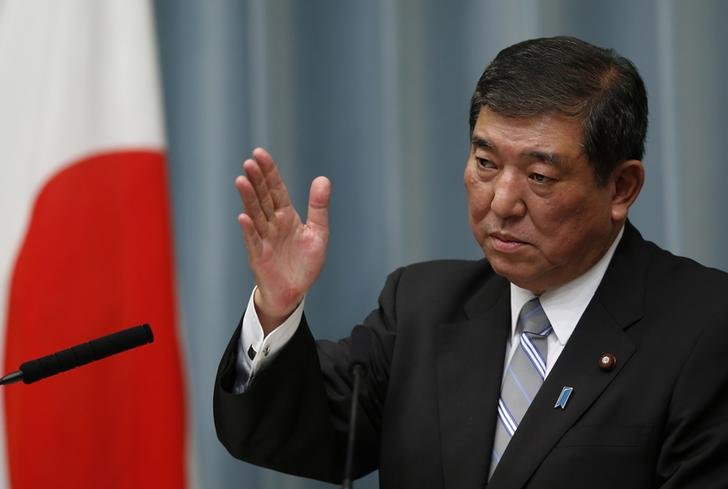
Ishiba’s Leadership Test: Uniting Japan’s Ruling Party
- Shigeru Ishiba, the new leader of Japan’s ruling Liberal Democratic Party (LDP), faces the challenge of uniting the party and deciding when to call a general election.
- Ishiba’s leadership is threatened by Yoshihiko Noda, the head of Japan’s main opposition party, who plans to shift his party toward the center.
- Ishiba’s key cabinet and party executive posts will be closely watched as they will provide insights into his leadership style.
- Despite his victory in the leadership election, Ishiba’s ability to ensure stability and maintain power within the party remains uncertain.
In a significant political development, Shigeru Ishiba, the newly elected leader of Japan‘s ruling Liberal Democratic Party (LDP), is set to face a make-or-break moment as he steps into the role of Prime Minister. Ishiba’s victory in the party’s leadership election, which saw a record nine candidates vying for the top spot, is expected to result in an initial surge in public support. However, the 67-year-old leader does not have the luxury of basking in this glow, as he is immediately confronted with two pressing issues.
Firstly, Ishiba must decide when to call a general election to seek a public mandate. The prevailing view in political circles suggests that Ishiba may dissolve the powerful House of Representatives for a general election to be held on either October 27 or November 10. This decision is crucial as it will set the stage for the public’s endorsement or rejection of the new leadership.
Secondly, Ishiba faces the daunting task of uniting a party that was split over the leadership election. The lack of faction-based support during the election left it up to each lawmaker to decide who to vote for, a factor that political observers say split the vote and made the outcome of the race unpredictable.
Ishiba’s Unity Challenge and Opposition Threat
Ishiba acknowledged this challenge after his victory, stating, Never have I experienced a presidential race like this in my 38-year career as a politician. He emphasized the need for unity within the party, saying, Unless we unite, we won’t be able to win elections.
The new leader’s challenges are further compounded by the reinstatement of Yoshihiko Noda, an eloquent former prime minister, as the head of Japan’s main opposition party. Noda’s anticipated push to shift the left-leaning Constitutional Democratic Party of Japan toward the center is threatening to cut into LDP support among moderate conservatives. This political maneuver could potentially disrupt Ishiba’s plans and strategies, making his tenure as Prime Minister even more challenging.
In the coming days, Ishiba will finalize his key cabinet and party executive posts, which will determine the fortunes of the new administration. This process will be closely watched by political experts and the public alike, as it will provide insights into Ishiba’s leadership style and his ability to navigate the complex political landscape.
Ishiba’s Victory and Future Challenges
Despite these challenges, Ishiba’s victory in the leadership election is a testament to his political acumen and resilience. He beat his rival Sanae Takaichi, a 63-year-old conservative who serves as economic security minister, in a close runoff vote, securing 215 votes to Takaichi’s 194. This victory, however, does not guarantee a smooth tenure as Prime Minister. As Masahiro Iwasaki, a professor at Nihon University, pointed out, there is a question mark as to whether the new LDP chief can ensure stability and maintain power, as divisions within the party are likely to remain deep.
In conclusion, Shigeru Ishiba’s tenure as the leader of Japan’s ruling party and as Prime Minister will be marked by significant challenges. His ability to navigate these challenges, unite the party, and secure a public mandate in the upcoming general election will determine his success or failure in these roles. As Japan enters a new era of political leadership, the world will be watching closely to see how Ishiba handles these challenges and shapes the future of the country. His leadership will not only determine the future of the LDP but also the political and economic trajectory of Japan in the coming years.







Post Comment