US Prioritizes Curbing U.S. Financial Flow to China
- The U.S. is considering legislation to restrict investment in China, aiming to prevent funding of potential threats.
- The proposed law targets Chinese businesses linked to the military or involved in human rights abuses.
- China opposes the legislation, arguing the U.S. is abusing state power to target Chinese companies.
- The legislation reflects growing U.S. concerns about China’s human rights record and economic practices.
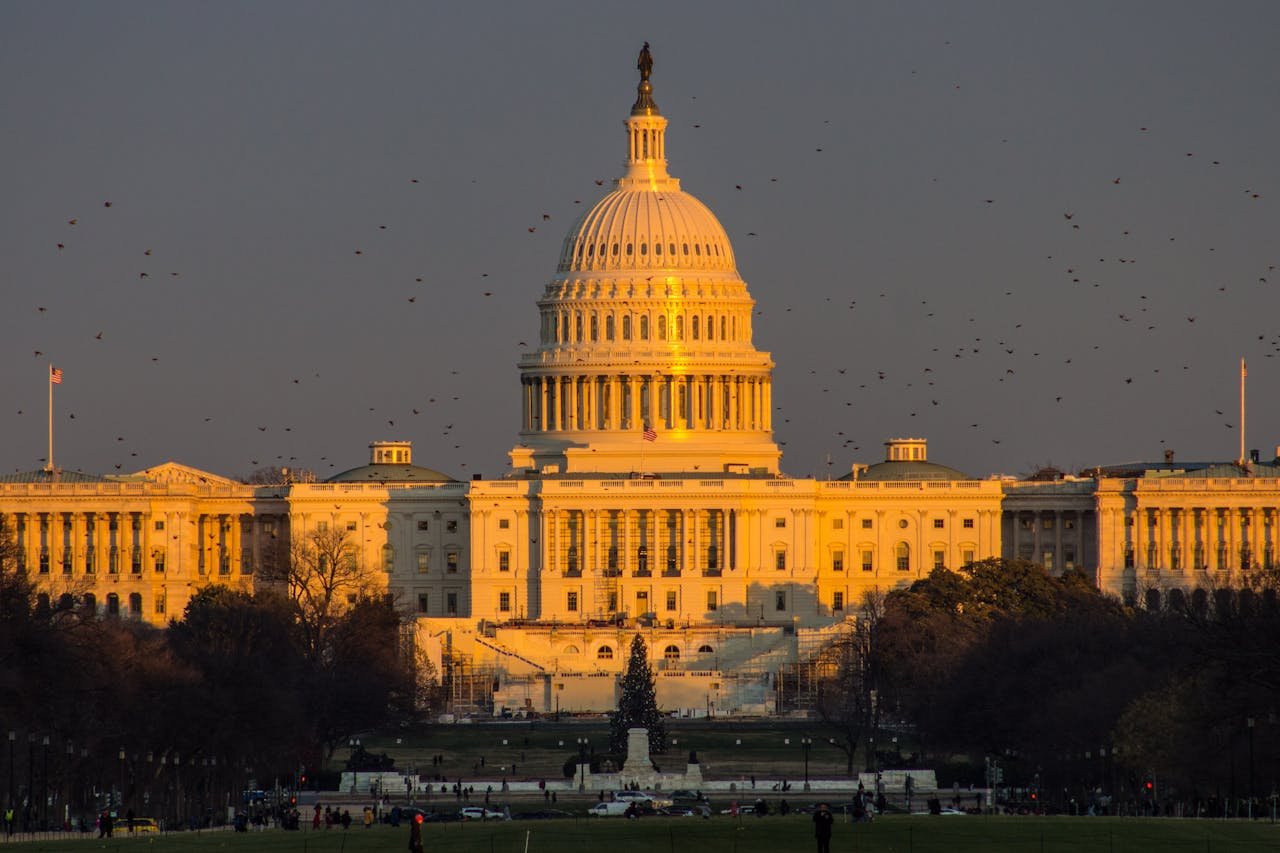
The Republican chair of the House of Representatives’ select committee on China, Representative John Moolenaar, recently announced that the panel’s top priority is legislation restricting U.S. investment in China. The aim is to prevent investors from inadvertently funding our own demise. This statement was made during a panel at the American Enterprise Institute, highlighting the growing concern over U.S. financial involvement in China.
Moolenaar’s remarks suggest a potential revival of long-sought restrictions on U.S. investment in China, which have previously faced a rocky path in Washington. A measure restricting outbound investment was removed from the Chips Act before it was signed into law in 2022. In August 2023, Democratic President Joe Biden issued an executive order authorizing the Treasury Department to bar or restrict U.S. investments in Chinese entities in three sectors: semiconductors and microelectronics, quantum information technologies, and certain artificial intelligence systems. However, the rules implementing that order, proposed in July, have yet to be finalized.
U.S. Concerns Over Chinese Investments
The proposed legislation aims to establish an outbound investment regime that prohibits U.S. investment in Chinese businesses linked to the Chinese military or involved in human rights abuses. The term genocide used by Moolenaar refers to China’s alleged treatment of its Uyghur minority in Xinjiang, a region that has been the focus of international scrutiny over human rights abuses.
The Chinese Embassy in Washington has firmly opposed these allegations and the proposed legislation, arguing that the U.S. is overstretching the concept of national security and abusing state power to target Chinese products and companies. The embassy added that China would continue to protect the legitimate and lawful rights and interests of Chinese companies.
Moolenaar also flagged specific Chinese companies that he said pose national security threats, including Chinese crane maker Shanghai Zhenhua Heavy Industry Co (ZPMC). He claimed that U.S.-bound cranes made by ZPMC, which accounts for 80 percent of ship-to-shore cranes in operation at U.S. ports, contain unauthorized cellular modems, creating a significant backdoor security vulnerability.
Implications for U.S.-China Relations
The United States and other Western countries have imposed sanctions on Chinese officials for human rights abuses in Xinjiang, which the United States has said have amounted to genocide. China rejects allegations of abuses, including the use of forced labor in Xinjiang, and describes the camps it has set up there as vocational training centers for Uyghur Muslims that help combat religious extremism.
The proposed legislation and the concerns it raises are part of a broader context of U.S.-China relations, which have been marked by tensions over trade, technology, and human rights. The U.S. has long been critical of China’s treatment of its Uyghur minority, with allegations of forced labor, mass surveillance, and other human rights abuses. These issues have been a significant factor in the deterioration of bilateral relations and have led to sanctions and other measures by the U.S. and its allies.
The U.S. government’s efforts to curb investment in China reflect a broader trend of growing scrutiny of China’s human rights record and its economic practices. This trend has been driven by a range of factors, including concerns about China’s increasing global influence, its assertive behavior in the South China Sea, and its handling of the COVID-19 pandemic.
In conclusion, the proposed legislation to curb U.S. investment in China represents a significant development in U.S.-China relations. It reflects growing concerns in the U.S. about China’s human rights record and its economic practices, and it could have significant implications for U.S. businesses and the global economy. However, the legislation faces a potentially difficult path ahead, given China’s firm opposition and the complex dynamics of U.S.-China relations. The outcome of this legislative effort will undoubtedly have far-reaching implications for the future of U.S.-China relations and the global economic landscape.










Post Comment