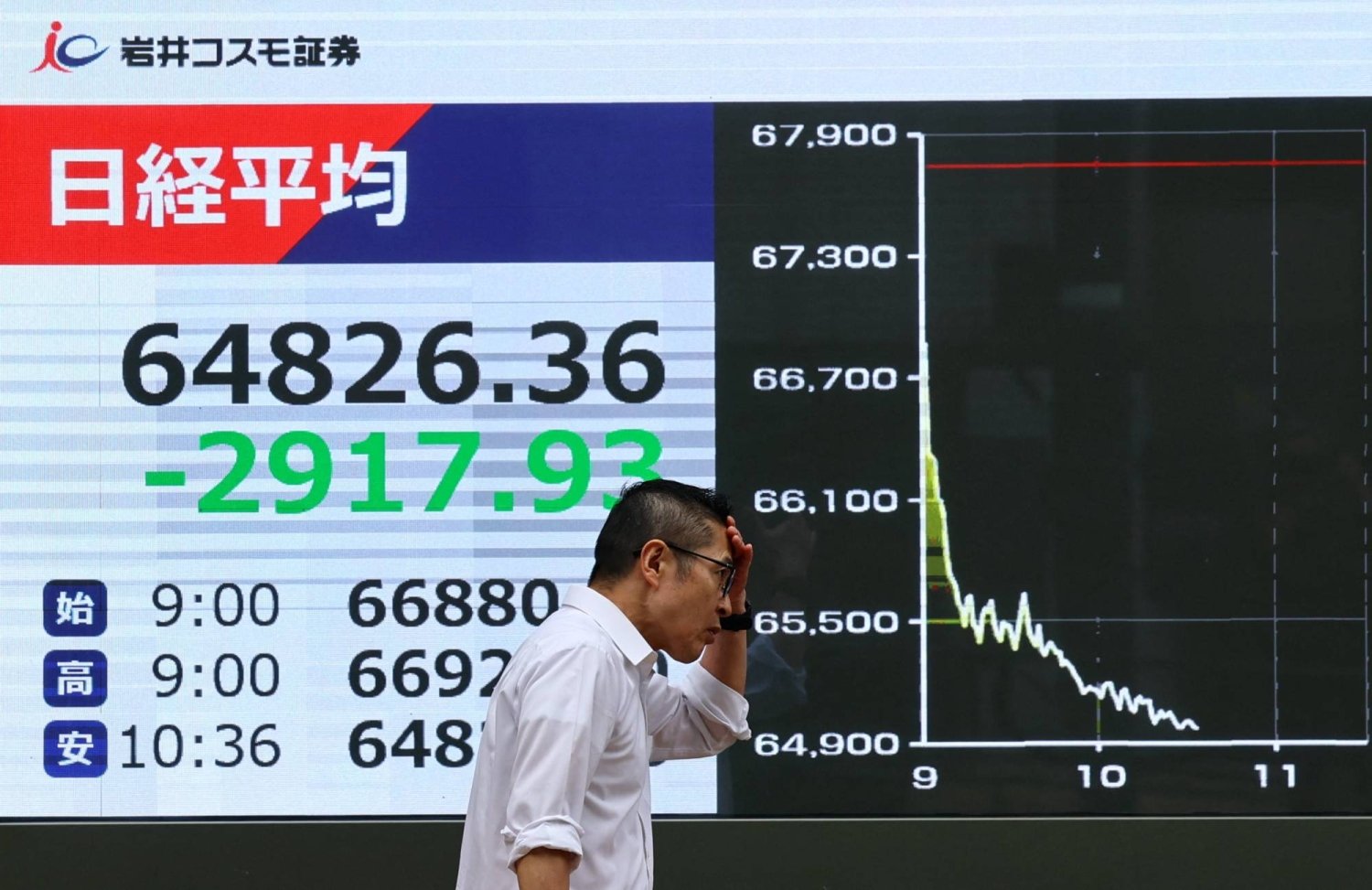
Nikkei 225 falls 5% on rate and AI concerns
The Nikkei 225 stock average fell more than 5% in Thursday trade, joining a global tech-stock rout that began in the United States overnight.
Advantest was down more than 15% at midday, while Tokyo Electron declined about 8%. SoftBank Group fell more than 10% and Kioxia more than 11%.
In U.S. trading on Wednesday, the S&P 500 fell 1.11% and the Nasdaq composite declined 1.88% after a higher-than-expected inflation reading fed into concerns about the economy and high valuations in technology shares.
The Philadelphia Semiconductor Index, which measures the performance of 30 chip stocks, declined 4.3%. Nvidia was down 3%, while Oracle was down about 9%.
Weakness extended into Asian trading, with South Korea’s Kospi falling about 8%. Samsung Electronics shares were off almost 10% and SK Hynix was down about 11%.
In Tokyo, stocks opened weak and fell steadily throughout the morning and into the afternoon. At about 1 p.m., the Nikkei 225 hit the low for the day of 64,092.74, down 5.39%.
Elevated oil prices also weighed on sentiment, with the conflict in the Middle East dragging on and threatening continued uncertainty. Brent crude remains above $100 a barrel.
On Wednesday, the United States reported that September’s inflation was 3.7%. Traders briefly priced in a 50% chance of an October interest rate increase, though that number fell back to 27%.
The U.S. Federal Reserve is scheduled to hold a policy meeting on Oct. 27 and 28.
As weakness in stocks heightened risk aversion, bonds benefited. The yield on the 10-year Japanese government bond fell to 2.93%, its lowest level in about a month.
Bond prices move inversely to yields.
While the Japanese yen was trading near ¥159 to the dollar on Wednesday night, the currency moved below ¥158 on Thursday.
On Oct. 5, the Nikkei 225 traded above 70,000 for the first time in about three months, helped by solid U.S. tech-stock performance. The all-time high of 72,831.73 was set in June.
The Nikkei 225 is down more than 10% from its peak but still up 35% over the past year.













Post Comment