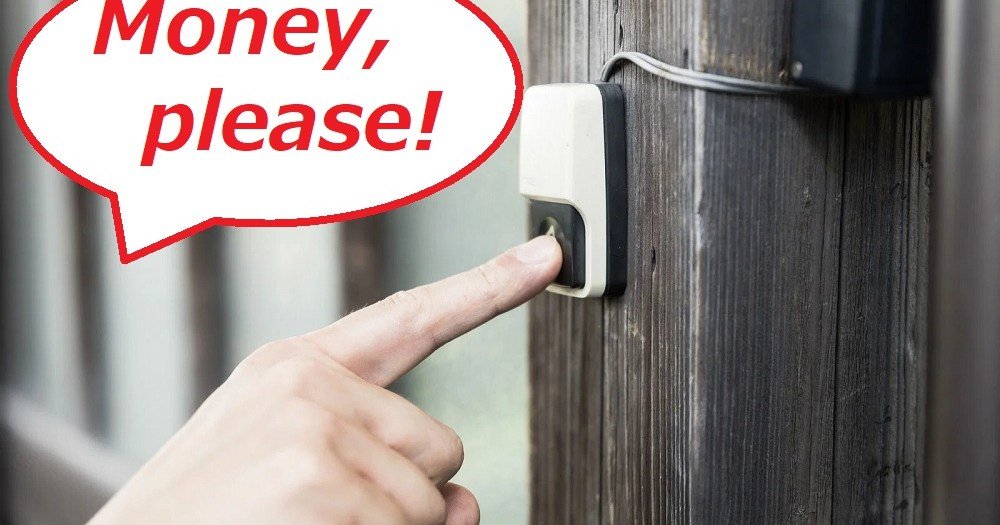
Japan restarts at-home collection agent visits for public TV fees
Japan’s public broadcaster will once again send third-party agents to people’s doors, resuming unpopular tactic of collecting quasi-obligated fees.
Imagine you’re sitting at home, and all of a sudden there’s a knock at the door. You go to see who it is, and it turns out to be someone saying that you have to give them some money, right then and there, to fulfil your civic duty of funding the police or fire department.
That’d be pretty strange. Generally, things that are supposed to be public services are supposed to be funded through tax revenues, not by individual organizations showing up at your home with an outstretched palm. And it would be even weirder if the person asking you for money was not themselves part of the police or fire department, right? And yet, for many years, this was how Japan’s public broadcaster, NHK, did things. NHK would contract with third-party, private-company bill collectors, who would show up at people’s homes, including at night, and ask for money if they didn’t have a record of the occupant having paid their NHK fees recently.
This, as you might imagine, was not a visit that any members of the public enjoyed getting, especially given the aggressive tone and shady tactics some collection agents employed. After years of blowback, in 2023 NHK finally did away with the practice of at-home visits by third-party collection agents, but on Monday, they announced that they’re bringing them back.
NHK fees exist in an unusual legal space. According to Japan’s Broadcasting Act, anyone with a device that is able to receive NHK broadcasts is required to pay an annual fee of 12,276 yen (US$77), and for those with devices capable of receiving not just NHK’s terrestrial broadcasts but their satellite one as well, the free rises to 21,765 yen a year (those who don’t want to cough up a whole year’s worth of fees all at once can opt for a two or six-month plan, but at higher per-month rates).
Note that actually watching the broadcast is not stipulated as being part of the condition for payment. Simply having a TV that receives NHK broadcasts, which TVs sold in Japan do by default, is enough, and NHK holds that since they produce online content as well, now any household where at least one person has a smartphone, tablet, or Internet-connected PC has to pay too.
Here, though, is where things get messy. That same Broadcast Act that says people have to pay NHK fees? It doesn’t include any sort of punishment for non-compliance. The fact that NHK apparently can’t just receive an equivalent cut from tax revenue, nor is able to send out payment notices that recipients legally have to comply with, casts further doubt on just how legit the system really is. The use of third-party collectors, and also some embezzlement/accounting scandals within NHK, haven’t helped the public broadcaster’s image either, nor inspired confidence that they’re appropriately using the money they do collect.
But NHK is unhappy with the amount of fees it’s been collecting recently, saying that the 585.1 billion yen it gathered in 2025 was down 5 billion yen from the year before. The organization is also concerned that this was the seventh year in a row for fee collection revenue to decline.
So NHK will once again be having third-party agents to go to people’s homes and ask them to pay up if they haven’t already. The program has already resumed in parts of Osaka and Hyogo Prefectures, and the current plan is to expand it to large cities like Tokyo and Nagoya first, followed by a potential further spread to smaller-sized communities.
If you’re wondering whether NHK has to pay the collection agents, the answer is yes, and agents get paid higher amounts the more fees they collect. As a matter of fact, NHK has had to reduce the amount they’ll be paying collection agents compared to previous rates, as costs associated with the old arrangement were deemed too high.
NHK is, at least, aware of the bad reputation these tactics have earned them in the past, and is trying to do things a little less abrasively this time around. Instead of sudden, unannounced visits, written notices will be mailed to households first, with in-person visits coming later. It’s not clear whether those who receive a notice will be asked to schedule a visit, or if it’s just a unilateral declaration of when the agent will be coming. The goal, though, is to “achieve understanding and receive payment of fees through polite explanation,” so hopefully no one else is going to get their house tagged for nonpayment.














Post Comment