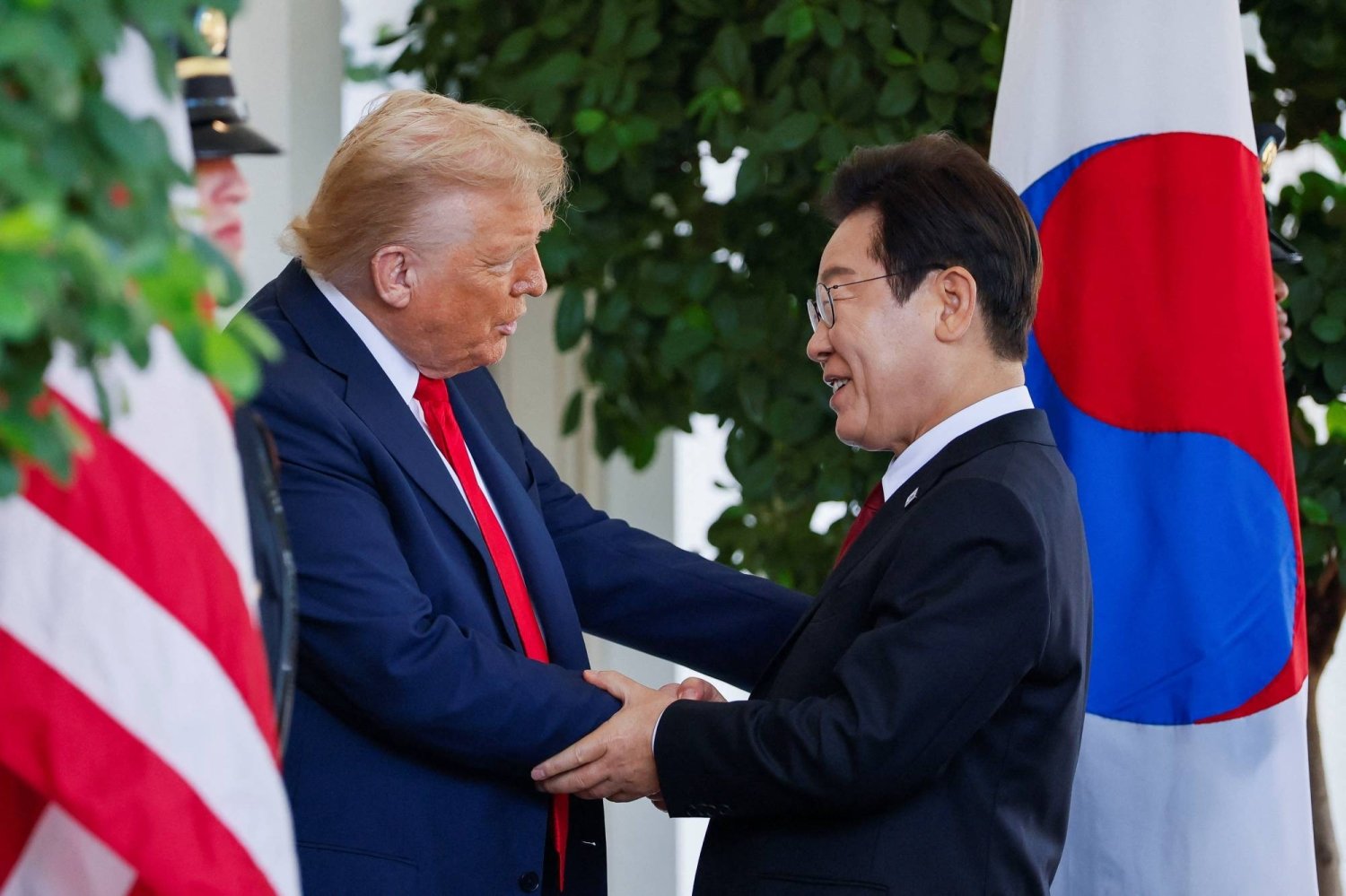
Trump’s Iran war tests South Korea’s alliance with the U.S.
More than two decades after the Iraq War drew South Korea into a contentious overseas troop deployment, Seoul is again facing pressure to send military assets to the Middle East, as U.S. President Donald Trump seeks allied support for a war with Iran that has no clear end in sight.
Since the conflict broke out in February, the Trump administration has repeatedly criticized allies and partners — including Seoul and Tokyo — for failing to help secure the Strait of Hormuz, which carried more than a quarter of global seaborne oil trade before the war.
South Korea has come under particularly intense scrutiny in recent weeks, with Trump publicly singling out President Lee Jae Myung for declining to help U.S. operations against Iran and citing Seoul’s reluctance when ordering an unusual reduction in the annual joint Ulchi Freedom Shield military drill last month.
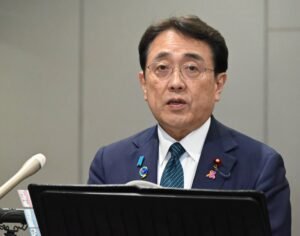
“If the government submits a military deployment motion today, I believe there is a real chance of it passing,” Kim Young-bae, a senior lawmaker from South Korea’s ruling Democratic Party, told The Japan Times in a recent interview.
But any deployment would force Seoul to balance relations with its most important ally against domestic opposition and the risk of retaliation from Tehran, which has warned that South Korean military involvement would be tantamount to aiding American aggression.
Kim made clear that the prospect remained politically fraught, and that persuading the public would be an uphill battle given the war’s unpopularity.
“It would be a major burden for the Lee government and would undoubtedly hurt the ruling party in coming elections,” he said.
A poll released Monday by the Reform Institute, a think tank affiliated with South Korea’s Reform Party, found that 37.6% of respondents favored deploying military personnel only as part of a multinational coalition, while 25.8% preferred providing defense materials and maintenance support and 19.7% opposed any military involvement.

For now, the Lee government is keeping its options open.
South Korean media reported Tuesday that the Defense Ministry confirmed it had sent a fact-finding team over the weekend to the United Arab Emirates to assess conditions around the strait. The team is reportedly examining potential bases and ports, along with maintenance, supply and operational requirements.
Military planners are studying possible contributions, including the dispatch of maritime patrol aircraft, explosive-ordnance disposal personnel and unmanned mine-clearing equipment.
An official military deployment, however, would require the National Assembly’s consent.
South Korea has previously navigated a similar dilemma. In 2020, amid U.S. calls to help safeguard shipping lanes near Iran, the Cheonghae anti-piracy unit temporarily expanded its operational area into the Strait of Hormuz — though stopping short of officially participating in a U.S.-led maritime construct.
But the stakes are arguably higher today, with the U.S. in direct combat with Iran and Washington’s demands increasingly entangled with other issues in its relationship with Seoul.
Kim argued that the Trump administration’s pressure over the Hormuz issue should not be viewed in isolation, but as part of a broader negotiation in which Trump is seeking to accumulate “bargaining leverage” ahead of the November midterm U.S. elections.
With the wars in Iran and Ukraine showing little sign of ending, Kim said Trump’s decision to scale back Ulchi Freedom Shield could be read in part as a signal to North Korea that he remains open to renewed talks, while at the same time squeezing Seoul to accelerate its $350 billion investment commitment in the U.S. under last year’s tariff agreement.
Pyongyang has long treated a reduction in U.S.-South Korea military activity as part of a prerequisite for renewed dialogue with Washington.
Confronting a similar dilemma with Trump, Japan has so far sidestepped direct military involvement, citing legal constraints on overseas deployment of the Self-Defense Forces.
Tokyo has instead sought to placate Washington through other means, including the swift implementation of investment commitments in the U.S. while leaving open the possibility of sending minesweepers once hostilities subside.
Kim said the simultaneous demands on Japan and South Korea could create an opening for the two key U.S. allies to establish themselves more firmly as regional partners and explore broader multilateral arrangements for advancing their respective interests.
“Japan and South Korea are economic partners that the U.S. cannot ignore when it comes to economic security and global supply chains,” Kim said, urging the two Asian powerhouses to coordinate more closely in response to Washington.
As for staying on the sidelines, some security experts say that would in itself carry costs.
“The Strait of Hormuz is not somebody else’s problem,” said Chun In-bum, a retired South Korean Army lieutenant general and senior research fellow at Korea University’s Asiatic Research Institute. “If it is closed or seriously disrupted, Koreans will feel the consequences very quickly in energy prices, transportation, industry and ultimately their daily lives.”
Roughly 61% of South Korea’s crude oil imports and 54% of its naphtha imports passed through the Strait of Hormuz last year.
Chun said any South Korean deployment should focus on protecting commercial shipping through surveillance, escorts, logistical support and mine-clearing, adding that participation in offensive operations against Iran should require a separate political decision.
Kim, however, said the economic case for direct military intervention had weakened as Seoul increased crude imports from the U.S. and Gulf producers have utilized alternative export routes, including Saudi Arabia’s Red Sea corridor.
Although the alliance with Washington remains “the backbone of South Korea’s national security strategy,” he said Seoul’s overriding security priority remains peace and stability on the Korean Peninsula.






Post Comment