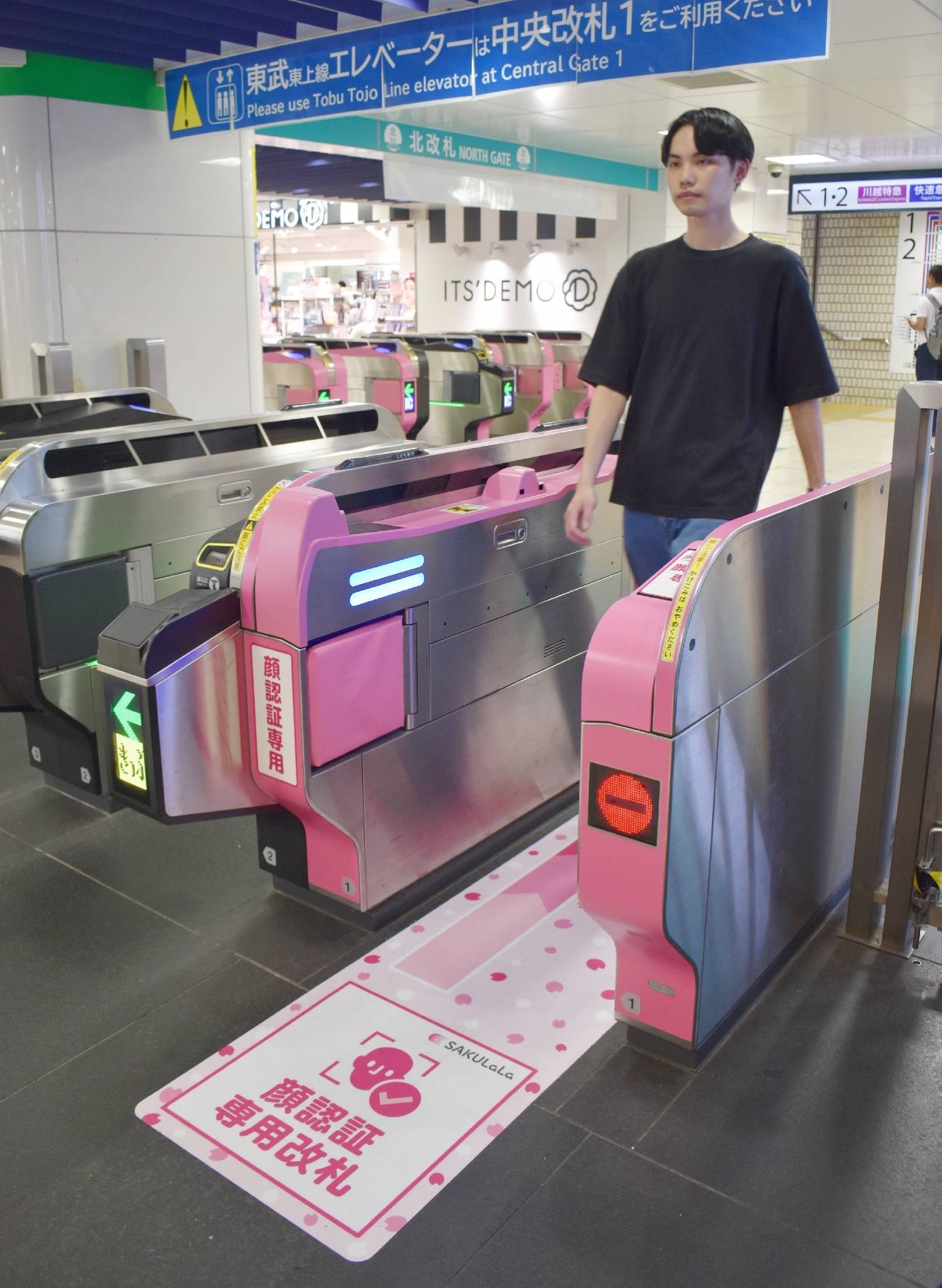
Facial recognition technology coming into wider use in Japan
Services using facial recognition technology are expanding in Japan, allowing, for example, touchless or ticketless entry through train station gates and payments at shops without the need to take out a wallet or a credit card.
Expectations are growing that the evolution of artificial intelligence will improve accuracy of facial recognition systems and help reduce fraud. Meanwhile, concerns about privacy violations persist, making thorough user information management essential.
Trial Holdings, which runs discount stores and other operations, has introduced a payment service using NEC’s facial recognition technology at 15 stores in Tokyo and Fukuoka Prefecture. Advance registration allows customers to shop simply by scanning goods at the self-checkout counter without using cash or smartphone payment services.
People can watch professional baseball games of the Yomiuri Giants at Tokyo Dome by entering the stadium through a Panasonic Connect facial recognition system after obtaining an ID and pay at some shops without cash or credit cards.
Hitachi and Tobu Railway have installed facial recognition train ticket gates at Ikebukuro Station on the railway operator’s Tojo Line and other stations. In the future, the technology is expected to become available for payments at commercial facilities, including nearby convenience stores.
Facial recognition technology offers benefits such as preventing the loss of valuables, reducing illegal entry and shortening wait times.
At Genki no Ie, a nursing home for elderly people in the city of Kurashiki, Okayama Prefecture, a facial recognition system is used to accept visitors, helping ease the burdens on its staff workers and residents’ relatives.
Kunio Furuta, a Panasonic Connect official, said, “Facial recognition technology has become more accurate with the evolution of AI and can be used for various purposes.” The related market is projected to grow from ¥55.7 billion last year to about ¥130 billion in 2030.
Conversely, an official of the Japan ID Connect with Secure Authentication Promotional Association said, “Users are concerned that they may be tracked,” adding, “Businesses must operate facial recognition systems very carefully so as not to infringe on privacy.”










Post Comment