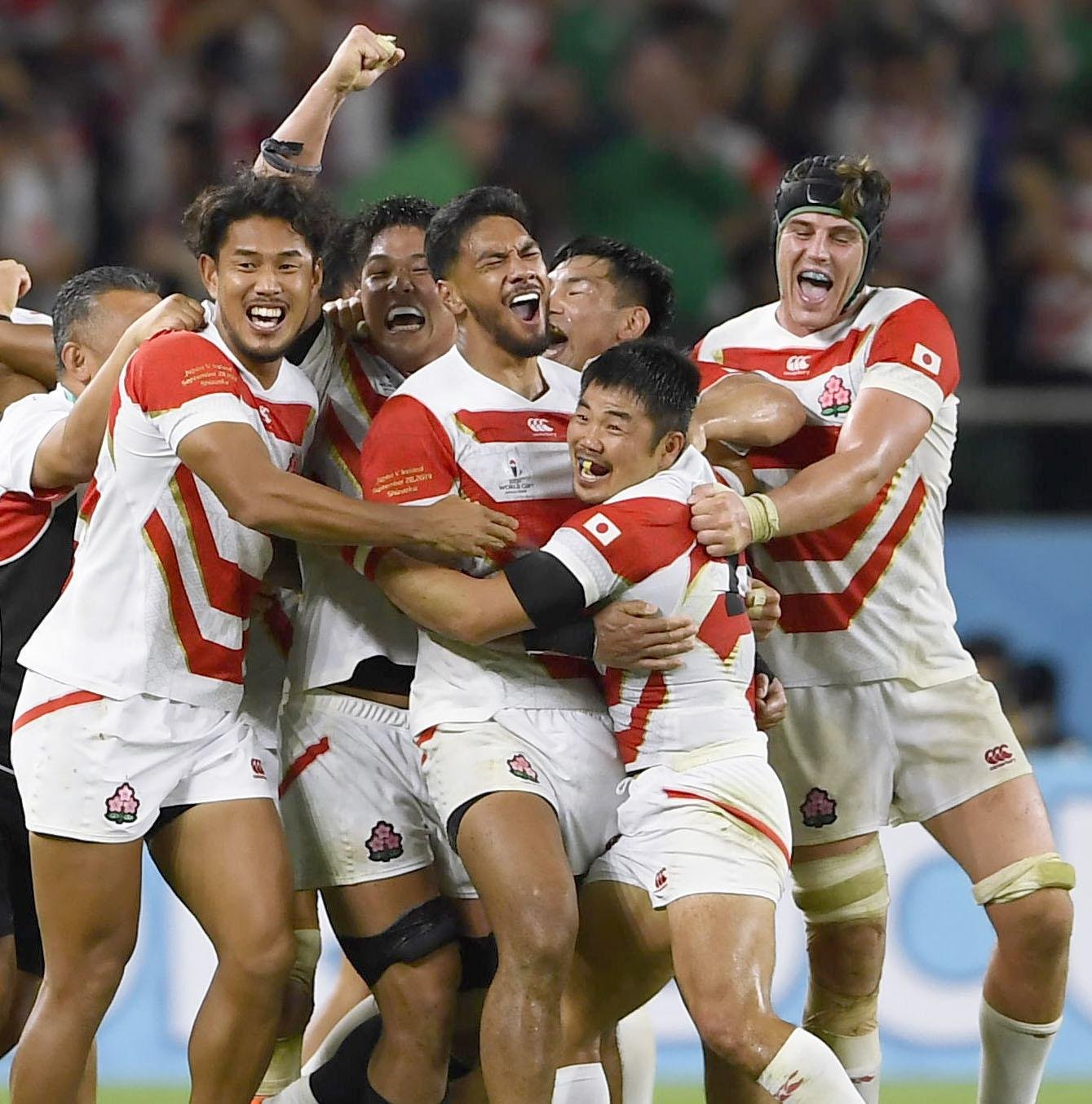
Naturalized players urge fairness in League One nationality dispute
Naturalized players challenging Japan Rugby League One’s new eligibility rules share the goal of developing more homegrown talent but want a fair transition that recognizes their contributions to the game and keeps their existing status, former Brave Blossoms standout Timothy Lafaele said Thursday.
The Kobe Steelers center is among a group of 24 foreign-born players with Japanese citizenship who are mounting a legal challenge against League One’s classification change that places most of them into a different category with fewer playing opportunities than their Japanese-born counterparts.
Speaking at the Foreign Correspondents’ Club of Japan in Tokyo, Lafaele stressed that the group does not oppose the new A1 and A2 categories slated for introduction from next season, with the aim of boosting the number of players coming up through the country’s rugby system.
Instead, they seek transitional measures so that those currently recognized as Category A — Japanese nationals without playing restrictions — are not stripped of that status and reclassified as A2 players with a smaller number of playing slots on the field during games and in match-day squads.
“I truly believe League One has the potential to become the best rugby competition in the world but to achieve that, its rules must reflect fairness and inclusivity, not only for the Japanese-born players, but also the foreign-born players who have committed their lives to Japan, earned citizenship, represented Japan and are proud to call the country home,” the 34-year-old Lafaele said.
To qualify for the unrestricted A1 category, foreign-born players generally will need to have either spent six years of compulsory education in Japan or earned at least 30 test caps for the Brave Blossoms.
The Samoan-born Lafaele, who became a Japanese citizen in 2017 and has 28 caps for Japan, said he and other naturalized players had demonstrated enough “commitment, contribution and service to Japanese rugby” to be recognized as domestic players.
The group taking part in the legal action also includes former Japan internationals Gu Ji Won, Isileli Nakajima, Asaeli Ai Valu, Hendrick Tui and Lemeki Lomano Lava, all of whom have agreed to be identified publicly.
“We all share the same to goal, to see rugby in Japan continue to grow and become one of the strongest competitions in the world,” Lafaele said.
Attorney Seiji Makino, who represents the players in the complaints filed with the Japan Fair Trade Commission and Tokyo District Court, indicated discussions with League One have recently become more constructive.
“Two weeks ago, I was full of passion to criticize League One, but now, actually, we are having a good conversation…a very good conversation with League One,” Makino said, emphasizing that the players are not seeking to block the classification changes, but only to keep their current status under a transitional arrangement.
“At its heart, this is a very simple story about players who built their lives and careers in Japan under one set of rules, and who are now having the ground moved under their feet,” he said.
© KYODO







Post Comment