JIP’s priorities take center stage even as household relief stalls
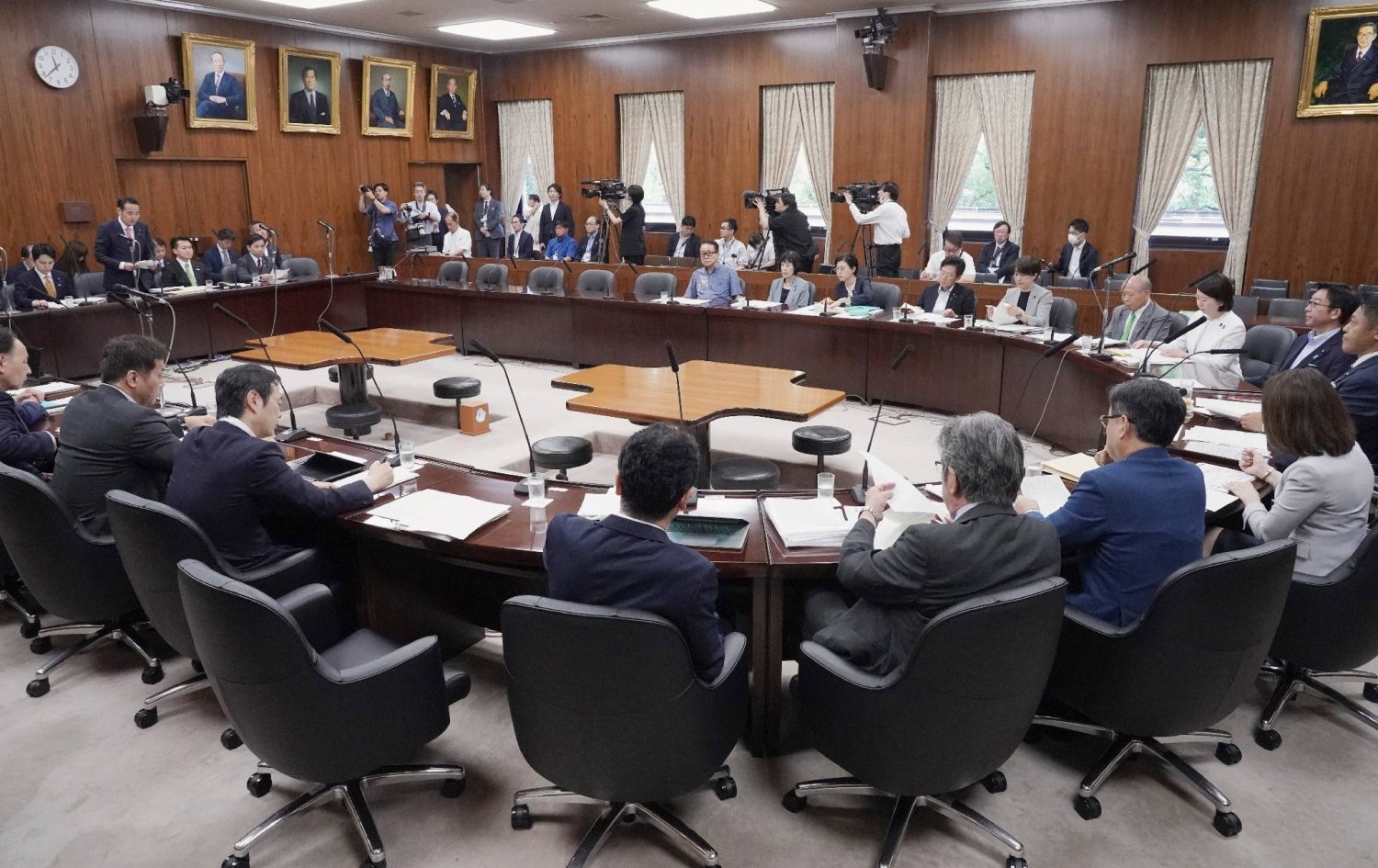
Prime Minister Sanae Takaichi entered the final days of an extended parliamentary session Thursday still trying to secure passage of legislation establishing a secondary capital, while talks on immediate economic relief remained stalled.
The bill, under debate in the Upper House, helped trigger the government’s decision to extend the session by eight days through Saturday. It would create a framework for designating a city capable of temporarily assuming key functions from Tokyo during a major disaster while serving as a regional economic hub.
For the Kansai-based Japan Innovation Party (JIP), which has long promoted Osaka as Japan’s “second capital,” passage would be a tangible reward for joining the governing coalition. For Takaichi, however, it follows a bruising attempt to advance another signature JIP demand of cutting Lower House seats by roughly 10%.
“This is simply not the kind of bill that warrants extending the parliament session,” Japanese Communist Party lawmaker Mikishi Daimon said at a parliamentary deliberation Thursday, calling the JIP’s push “utterly embarrassing.”
“If the parliamentary session is to be extended at all, that time should be used to pursue economic measures and address the rising cost of living,” he added.
Thursday’s deliberation has shown how the secondary-capital push has struggled to escape the JIP’s broader ambition for its stronghold, Osaka.
The party has linked it to reviving the Osaka metropolis plan, which would abolish the city of Osaka and replace it with special wards. Osaka city voters narrowly rejected that proposal in referendums in 2015 and 2020.
Already in this parliamentary session, the ruling bloc’s move to force the seat-cut bill into deliberations partly prompted opposition parties to boycott proceedings beginning in late June, leaving the Diet deadlocked until July 8.
Takaichi eventually agreed with the JIP leader to shelve passage during the current session while continuing to pursue the secondary-capital legislation.
Her determination partly reflects how the partnership began.
After Komeito left the coalition last October, Takaichi initially sought cooperation from Democratic Party for the People leader Yuichiro Tamaki, but no deal emerged. The JIP, also known as Nippon Ishin no Kai, subsequently came to its rescue, signing a coalition agreement with the Liberal Democratic Party and backing Takaichi in the parliamentary vote that helped make her prime minister.
That support was indispensable then. It appears less so now. Takaichi’s LDP won 316 of the Lower House’s 465 seats in February, enough to pass legislation without the JIP.
Still, the junior partner’s priorities continue to shape the parliamentary agenda.
Meanwhile, cross-party talks on reducing the consumption tax on food — a policy with a more immediate impact on inflation-hit households — remain gridlocked. The proposal was also part of the coalition pact, but its language was less binding, calling only for legislation to be considered.
The ruling party proposed reducing the consumption tax on food from 8% to 1% for two years starting next April, alongside income-linked cash payments to offset the 1%. Opposition parties rejected the plan at the latest council meeting Wednesday, arguing that returning the rate after two years would be a de facto tax increase, with some calling for an immediate benefit payment before the tax implementation.
The parliamentary wrangling comes as the prime minister’s once-formidable public support shows signs of weakening. A Mainichi Shimbun poll conducted on July 18 and 19 put Cabinet approval at 41%, down 10 percentage points from June — adding to the political cost of keeping the JIP’s priorities at the center.








Post Comment